The Best Tool to Learn about Italian Wine

italian wine regions - quattrocalici

Wine in Lombardy

local grapes, wine, and food

lombardy's wine figures

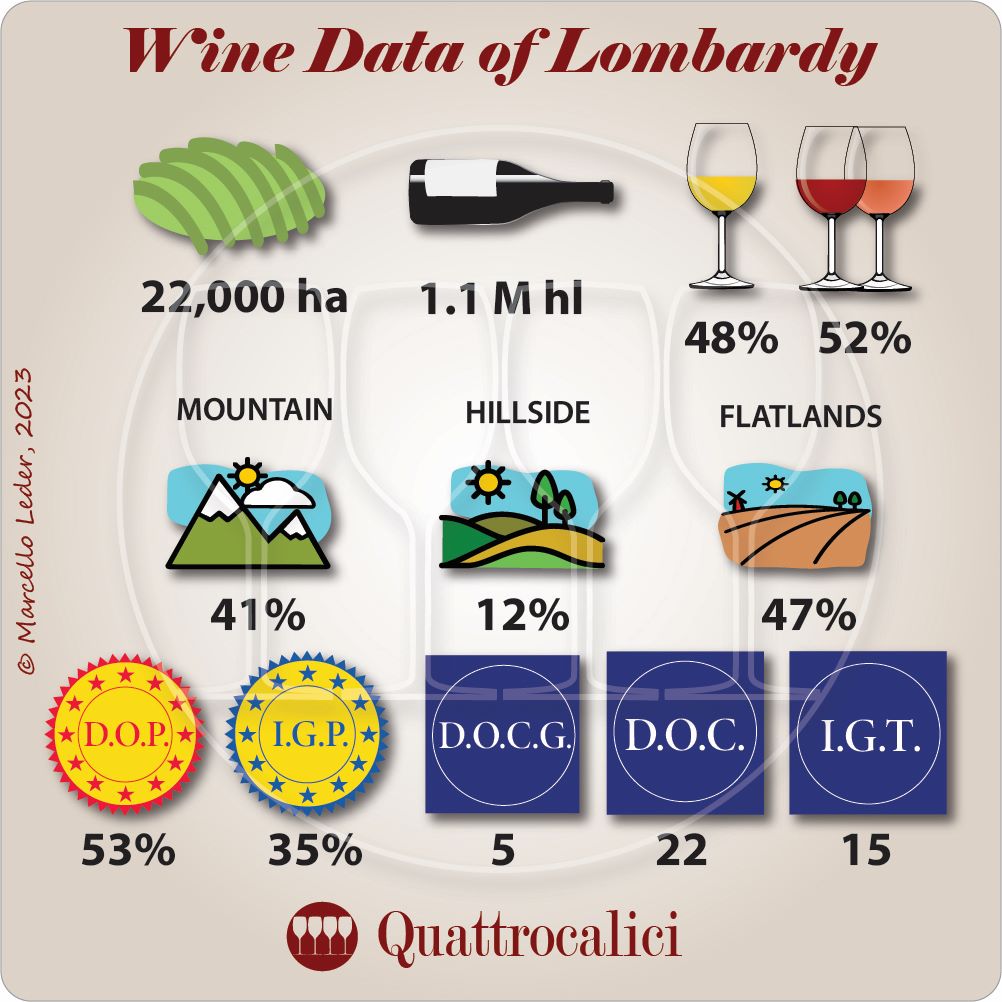
Lombardy is a very extensive region (about 24,000 km²), therefore it features areas with very different characteristics both from a climatic and soil perspective. It ranges from decidedly mountainous areas, like the Valtellina, to flat or partially hilly areas such as the Oltrepò Pavese, and also includes areas with an absolutely unique microclimate, like those around Lake Garda. About half of the regional surface is flat, while a further 40% is mountainous. Just over 10% of the surface is hilly, and therefore suitable for quality viticulture. All this means that from a wine-growing perspective, cultivations and productions vary depending on the area considered.

Wine figures of Lombardy

wines in lombardy

Viticolture in Lombardy

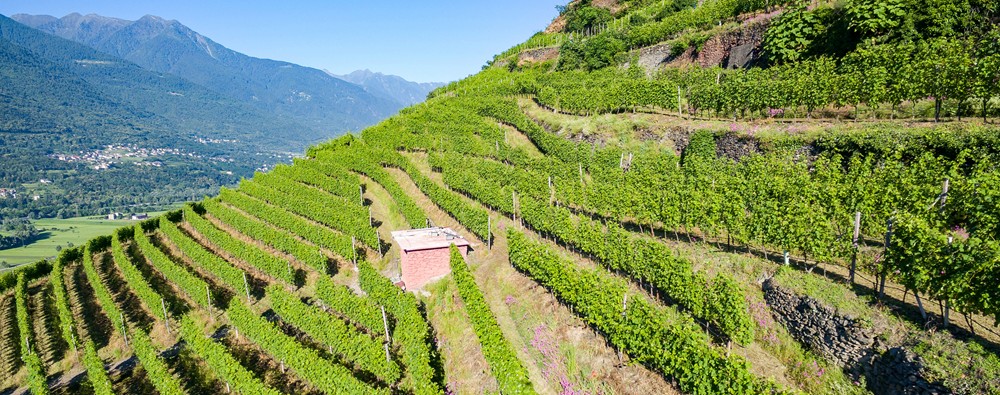
The 30,000 hectares of vineyards present in Lombardy are spread over the wide regional surface. The Valtellina vineyards are located on the slopes of the mountains, on the right side of the Adda river, where sunlight can ripen the grape clusters, while the vines are cultivated on terraces, often placed at the very limit of the maximum altitude that allows their growth. In this area, the most widespread type of cultivation is the Guyot system. The Oltrepò Pavese, an area between the provinces of Pavia and Alessandria, has always been known for its massive productions of red wines primarily for regional consumption. The most common form of cultivation here is also the Guyot system.

History of Winemaking in Lombardy

The cultivation of vines in Lombardy dates back to prehistoric times, particularly to the Bronze Age, at the time of the first human settlements on the shores of Lake Garda and Lake Iseo. From the 7th century BC, the arrival of Rhaetian, Etruscan, and Ligurian populations introduced the region to the first winemaking techniques, which evolved and further consolidated under Roman domination. The fall of the Roman Empire gave way to the dominion of the Lombards, from whom the region takes its name, leading to a gradual abandonment of viticulture, lasting until the High Middle Ages. At that time, the spread of monastic agriculture reawakened interest in the vine and wine, even though the winemaking systems of the era produced a very harsh wine that was difficult to preserve. By the end of the 16th century, the influence of French oenological techniques allowed for the production of the first Chiarettos and ever-better and more preservable wines. Viticulture saw the gradual abandonment of cultivation systems with vines married to trees and the experimentation with new systems using inert supports and short pruning. However, the same period saw the abandonment of viticulture in many areas in favor of mulberry and silkworm cultivation. In the 19th century, the scourges of oidium, peronospora, and later phylloxera completely changed the ampelographic landscape of the region, leading to the disappearance of many native grape varieties. The contemporary era led to the slow recovery of viticulture, thanks to the impetus following the solution to the phylloxera problem through the use of grafted cuttings on American rootstocks and the progressive improvement of oenological and cultivation techniques. Thus, the spread of vines and wine production in Lombardy opened up new and previously unthinkable horizons.

valtellina vineyards
Vineyards in Grumello, Valtellina. Image: Depositphotos.com

Wine grapes of Lombardy

The grape varieties cultivated in Lombardy follow the territoriality of this vast region. In Valtellina, the main grape variety is Nebbiolo, locally called Chiavennasca. Other native grape varieties include Pignola, Rossola, and Brugnola (known in Emilia as Fortana or Uva d’Oro), all with black berries, rarely vinified in purity, and included in the blend of classic Valtellina wines. In the Oltrepò Pavese, the most widespread grape variety is Barbera, followed by Croatina, Bonarda, and Uva Rara. Pinot Nero deserves a special mention, while the white berry varieties cultivated here are Riesling Italico, Moscato, and Malvasia. Franciacorta, in the Lake Iseo area, is known for the cultivation of Pinot Nero, Pinot Bianco, and Chardonnay, mostly utilized in the sparkling wine producion. In the Lake Garda area the grape varieties Groppello, Barbera, Marzemino, and Sangiovese are grown. Additionally, the Colli Mantovani area is known for the cultivation of Lambrusco, particularly Lambrusco Viadanese.

Wine appellations of Lombardy

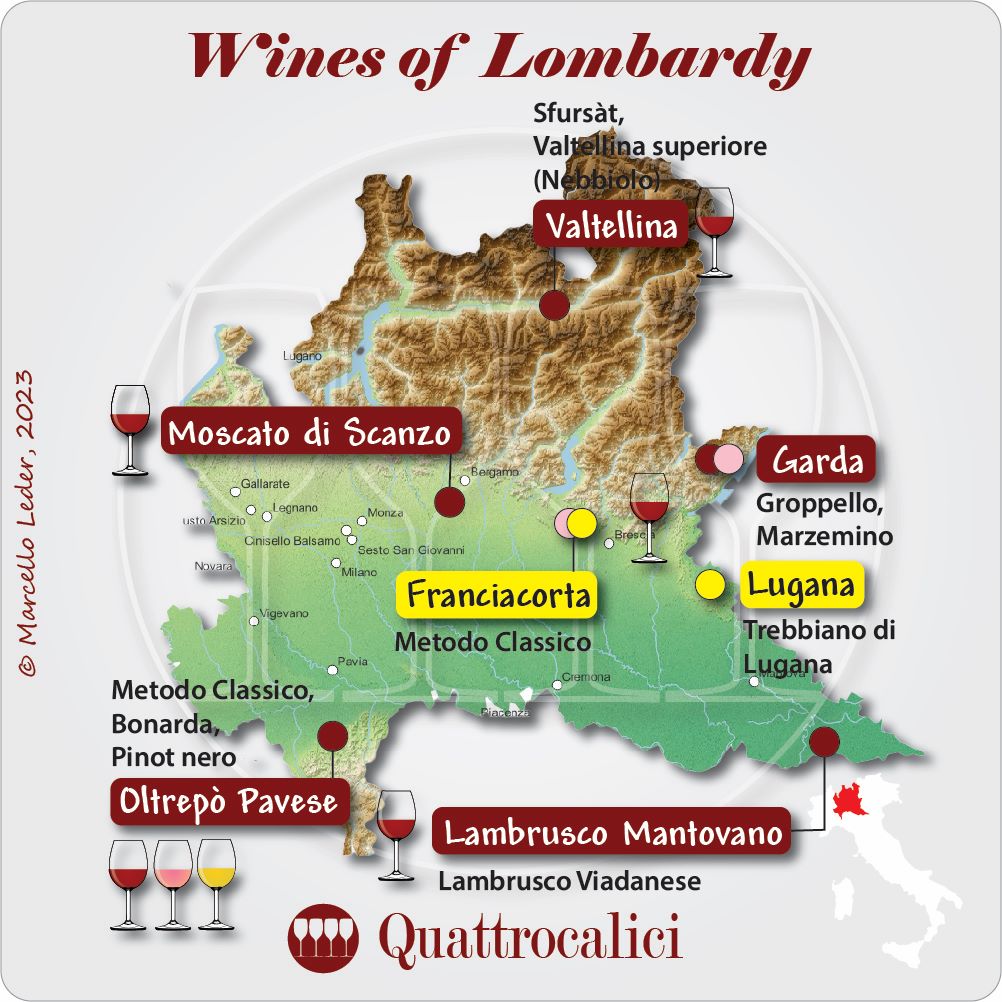
Starting from the north, the Denominations of Origin for wine in Lombardy include two DOCGs: Sforzato di Valtellina or Sfursat di Valtellina DOCG, a wine obtained through the partial drying of Nebbiolo grapes, and Valtellina Superiore DOCG. The Oltrepò Pavese has recently established itself as a region of excellence for sparkling wine production (Oltrepò Pavese Metodo Classico DOCG). Franciacorta is also known for its classic method sparkling wine (Franciacorta DOCG). With the same grape varieties, and possibly also Cabernet Franc, Cabernet Sauvignon, and Merlot, the wines of Curtefranca DOC are produced. In the Garda and Colli Mantovani area, we highlight the Garda DOC and Garda dei Colli Mantovani DOC with wines based on Groppello, Barbera, Marzemino, and Sangiovese. Also noteworthy are Lambrusco Mantovano DOC and Lugana DOC (white wines based on the Trebbiano di Lugana grape variety), which is interregional with the province of Verona. Other Lombard wine regions include San Colombano al Lambro DOC, between Pavia and Milan, with the same grape varieties cultivated in the Oltrepò Pavese, and Valcalepio DOC, located between Bergamo and Lake Iseo. In this area, native red grape varieties like Moscato di Scanzo are cultivated, from which Moscato di Scanzo DOCG is produced.

Wine areas of Lombardy

In Lombardy, there are significant wine-producing areas, in addition to a considerable variety of grape varieties and different pedoclimatic conditions, all characterized by high-quality oenological productions.

Franciacorta

Franciacorta, in the province of Brescia along the shores of Lake Iseo, covers an area of almost 3,000 hectares of vineyards that span 19 municipalities. It is the region where classic method sparkling wines have found their preferred territory. Viticulture has been present in the area since the 13th century, when it was called “Corte franca,” meaning free from the payment of duties. Discussions about sparkling wines date back to the 16th century, although the first bottle of sparkling wine labeled as Franciacorta was produced in 1961. Besides sparkling wines, the DOC Curtefranca offers red wines based on Cabernet, Merlot, Barbera, and Nebbiolo, and white wines from Chardonnay, Pinot Noir, and Pinot Blanc.

Lake Garda

The area around Lake Garda, or more specifically its Brescia side, features the native grape variety Groppello, along with Marzemino, Barbera, and Sangiovese, as the base for the red wines of the local DOCs. Garda DOC Bianco is instead produced with 70% of Riesling Italico grapes. On the lake’s southern shore, bordering the province of Verona, is the area for Lugana white wines, based on the Trebbiano di Lugana grape variety, and S. Martino della Battaglia, focusing on the Tocai Friulano a white grape variety also widespread in Veneto. In Botticino, the local red wine is made from Barbera, Marzemino, Schiava, and Sangiovese grapes. Near Lake Garda, in the province of Mantua and along the border with Emilia Romagna, is the production area for Lambrusco Mantovano. The base grape variety is Lambrusco Viadanese, named after the town of Viadana in the lower Mantua area, along the Po River. Other types of Lambrusco, such as Salamino, Sorbara, Grasparossa, are also cultivated here.

Oltrepò Pavese

Oltrepò Pavese, which includes the province of Pavia and parts of Milan and Lodi, produces the fragrant wines of San Colombano, mostly with Croatina and Barbera grapes, but also Chardonnay for white wine. Oltrepò Pavese is also the second area in Lombardy dedicated to the production of classic method sparkling wines, in this case based on Pinot Noir, vinified as blanc de noirs, along with Chardonnay, Pinot Gris and Pinot Blanc. Nearby, Bonarda dell’Oltrepò Pavese DOC, a lively wine made from Croatina grapes, is produced; it should not be confused with the Piedmontese Bonarda. There’s also Buttafuoco, a wine made from Croatina, Barbera, and Pinot Nero, and Sangue di Giuda, also from Barbera and Croatina grapes. The unique name of this wine seems to reference a legend about a repentant “Judas” resurrected in the town of Broni who, in exchange for his life being spared, miraculously frees the local vineyards from pests.

Province of Bergamo

In Valcalepio, in the province of Bergamo, viticulture dates back to ancient Rome. The DOC Valcalepio area stretches from Lake Como to Lake Iseo. Red wines here are made from Cabernet Sauvignon and Merlot grapes, while white wines are produced from Pinot Blanc, Pinot Gris, and Chardonnay. Near Bergamo, in the municipality of Scanzorosciate, the sweet Moscato di Scanzo DOCG is produced from the native grape variety of the same name, grown exclusively within the municipal boundaries.

Valtellina

Valtellina, in the province of Sondrio, produces Valtellina Superiore DOCG wine from Nebbiolo grapes, locally known as Chiavennasca. This denomination is divided into subzones Sassella, Grumello, Inferno, Valgella, and Maroggia. Here, grapes have been cultivated since pre-Roman times by ancient Celtic-Ligurian populations. The region is also renowned for its Sforzato o Sfursat di Valtellina DOCG, a dry red wine produced in a style reminiscent of Amarone. This wine is named after the selection and processing of Chiavennasca grapes, harvested from vineyards on the slopes of the mountains and left to dry on racks.

Regional Cuisine of Lombardy

Lombardy’s culinary landscape is as varied as its geography, stretching from the Alpine arc to the Po Valley, peppered with numerous lakes and rivers. The region’s cuisine is rich and diverse, predominantly featuring land-based ingredients due to its lack of coastal access. Appetizers often include a variety of cured meats, such as Bresaola from Valtellina or Salami from Brianza, Cremona, Varzi, and the Goose salami of Mortara, which pair excellently with a sparkling Bonarda from Oltrepò Pavese. Also typical are Veal tendon salads and Voghera peppers.

Among the first courses, a wide variety of Risottos stand out, with the most famous being Risotto alla milanese, traditionally served with Ossobuco and best enjoyed with a San Colombano Rosso wine. Risotto with frogs or perch from the lake, or other freshwater fish, pairs wonderfully with a savory Lugana. Stuffed pastas such as Casoncelli, Agnolotti, and Pumpkin Tortelli find their perfect match with a Valcalepio Rosso, Buttafuoco red wines or an Oltrepò Pavese Cruasè (sparkling rosé) respectively.

Soups and stews, including Milanese minestrone and Pavese soup (with stale bread and eggs), go well with a white aromatic wine as the Riesling Italico from Oltrepò Pavese. Pizzoccheri from Valtellina, buckwheat pasta cooked with cabbage and potatoes, seasoned with butter, potatoes, and plenty of melted Bitto cheese, which is also a key ingredient in Polenta taragna, and Sciatt, crispy round fritters with a tasty heart of Casera cheese, should be tried with a Valtellina Superiore red wine.

Main courses are predominantly meat-based, with famous dishes like Milanese veal cutlets, breaded and fried in butter, perfectly paired with a Pinot Nero from Oltrepò Pavese, and Ossobuchi, which can also accompany risotto, complemented by a Gutturnio or a Pinot Nero from Oltrepò Pavese. The region’s cuisine also boasts a rich selection of game dishes, including hare, pigeon, chamois, and roe deer, naturally paired with a Sfursat from Valtellina. Freshwater fish dishes, thanks to the abundance of rivers and lakes, feature trout, carp, and perch, ideally accompanied by a well-structured Lugana white wine.

Lombardy offers numerous cheeses with protected designation of origin, from Grana Padano to Formai de mut from the upper Val Brembana, Casera and Bitto from Valtellina, to Quartirolo Lombardo and many others. Among the desserts, Milanese Panettone, the fluffy Torta paradiso, and shortcrust pastry Offelle can be paired with an Oltrepò Pavese Moscato Spumante, while the Bergamo-style Polenta e Osei and Sbrisolona cakes from Mantua find their perfect match with a Valcalepio Moscato Passito.

Quattrocalici Wine Guide