
The Best Tool to Learn about Italian Wine

italian wine regions - quattrocalici

Wine in Veneto

local grapes, wine, and food

Wine figures of Veneto

In Veneto, the presence of both indigenous and international grape varieties characterizes each wine-producing area. To the west, on the Hills of Garda and in Valpolicella, the most important grape varieties are Corvina, Rondinella, and Molinara, from which the wines of Bardolino and Valpolicella are obtained. Between the provinces of Verona and Mantova, Lugana is a white wine produced with the Trebbiano di Soave grape, locally also known as Turbiana or Trebbiano di Lugana. Moving eastward, between the provinces of Verona and Vicenza we find the areas of Soave and Gambellara, known for their white wines made from Garganega grapes. The Colli Berici, located immediately south of Vicenza, produce red wines from international grape varieties Cabernet Sauvignon and Merlot, and the indigenous Tocai Rosso, a variety related to Cannonau or Grenache. The foothill zone of Vicentino, north of the city, besides reds, is known for the indigenous grape variety Vespaiola and the sweet wine produced from it, the famous Torcolato di Breganze. In Padova, on the Colli Euganei, mainly international red grape varieties are cultivated but especially Yellow Muscat, from which Moscato Fior d’Arancio DOCG is produced. In the flat area south of the capital, the Friularo grape variety is cultivated, a local name given to Raboso Piave, characteristic in turn of the Treviso area. Also in Treviso is located the original wine-producing area of Prosecco, made from the grape variety today called Glera, which now represents the most important Italian sparkling wine district, spanning almost the entire Triveneto region.

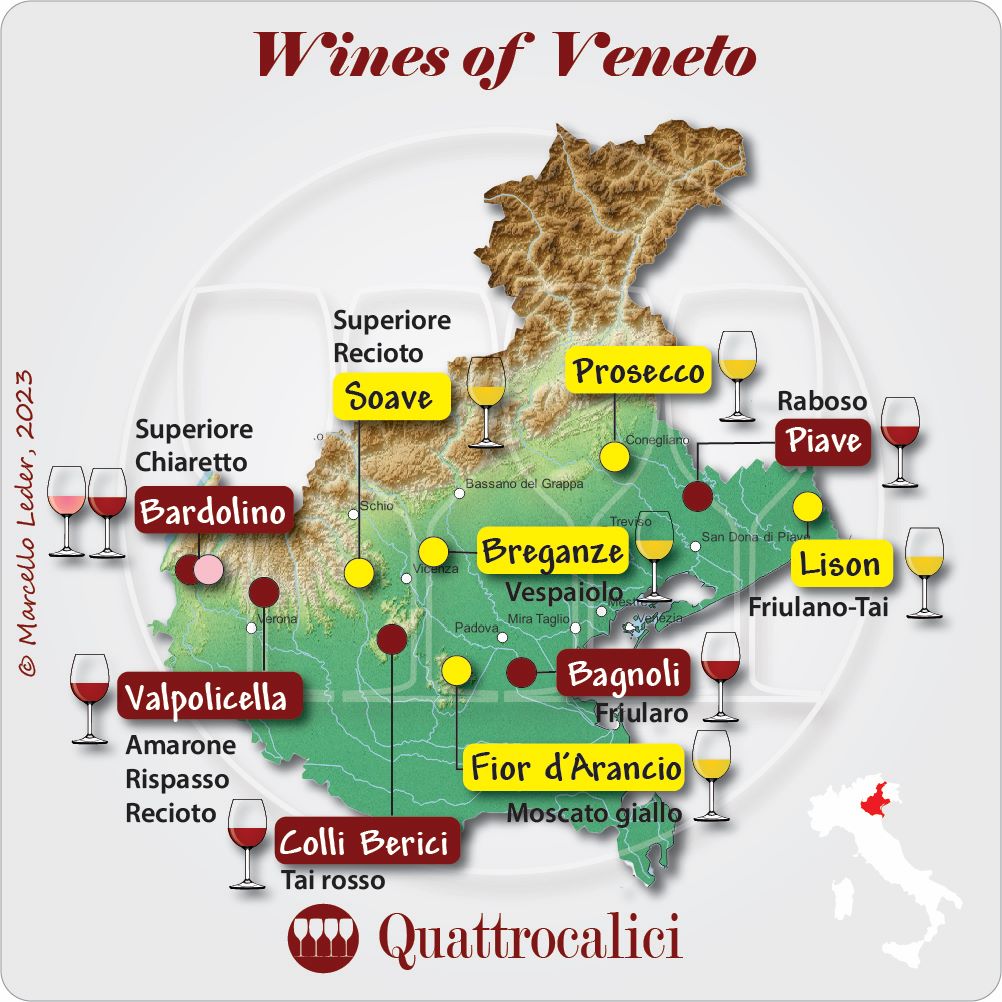
Wine figures of Veneto

Wines of Veneto

Viticolture in Veneto

Viticulture in Veneto, one of Italy’s most prolific and diversified regions in wine production, stands out for its exceptional variety of wines, the result of a unique combination of favorable climate, varied morphology, and centuries of winemaking know-how. This area of northeastern Italy, stretching from the Dolomites to the coast, showcases the exceptional diversity of its wines.

The climate of Veneto is characterized by considerable variety, from the moderate alpine climate in the northern mountainous areas to the Mediterranean climate along the coast and in the southern zones. This climatic diversity is crucial for cultivating a wide range of grape varieties, allowing both white and red grapes to express themselves at their best. The most prestigious wine zones benefit from a perfect combination of adequate sunshine, rainfall, and beneficial nighttime temperature variations during the ripening season, essential for the development of sugars and acids in the grapes, as well as for the concentration of aromas.

The Veneto territory is remarkably diversified, including flat, hilly, and mountainous areas. This morphological variety not only enriches the natural landscape of the region but plays a fundamental role in viticulture. The hilly areas, in particular, are renowned for their well-drained soils and optimal exposure, creating ideal conditions for quality viticulture. Vineyards located on gentle slopes allow for optimal sun exposure and natural ventilation that protects the grapes from diseases, favoring sustainable and high-quality cultivation.

History of Winemaking in Veneto

The presence of vines in Veneto dates back to the pre-Roman era, although it is only from the 7th century BC that the first written mentions of the wines from this area by the Romans are found, with references, among others, by Columella and Pliny the Elder. Acinatico was the Romans’ sweet wine, ancestor of Recioto (di Soave, di Gambellara, and della Valpolicella). Following the barbaric devastations, it was necessary to wait for the rise of Venice’s commercial power, which on one hand allowed the export of Venetian wines to other countries, but on the other also the introduction of vine cuttings from distant countries, such as Greece and Cyprus. Around the mid-1500s, the fame of the wines from the Treviso, Vicenza, and Valpolicella areas began. The first studies on the characteristics of the territory and the grape varieties that best adapted to it date back to the 1800s. Around the mid-1800s, with the arrival of oidium, followed by downy mildew and finally phylloxera, another dark era began for Veneto’s viticulture. The difficulties also laid the foundations for a rebirth, although it was only after 1950 that a true recovery of winemaking began in Veneto, and the strategic importance of quality was understood, starting a process that yielded its first results in the 1990s and continues to this day.

Wines of Veneto
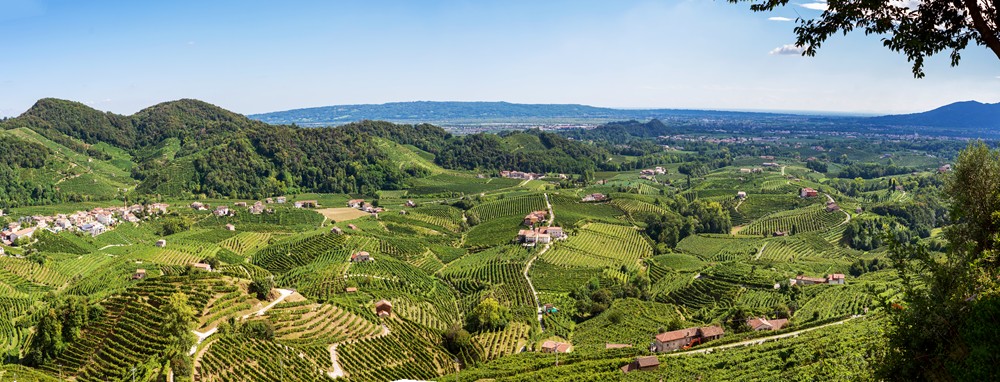
Vineyards in Valdobbiadene, close to Treviso Image: Depositphotos.com

Wine grapes of Veneto

In Veneto, there are many grape varieties that characterize the territory. Moving from east to west, we first find the area of the Hills of Garda Veronese and Valpolicella, characterized by the cultivation of black grape varieties such as Corvina, Rondinella, and Molinara, which give rise to Bardolino and the wines of Valpolicella. Between the provinces of Verona and Mantova, we find the Lugana area, a white wine created from the Trebbiano di Soave grape, locally also known as Turbiana or Trebbiano di Lugana. Between the Monti Lessini and the Colli Berici, we find the areas of Soave and Gambellara, known for their white wines made from Garganega grapes. The Colli Berici are especially known for reds, with Cabernet Sauvignon, Merlot, and Tocai Rosso, related to Cannonau or Grenache. The foothill zone of Vicentino, besides reds, is known for the indigenous grape variety Vespaiola used to produce the sweet wine Torcolato di Breganze. In Padova, on the Colli Euganei, mainly international red grape varieties are cultivated as well as Yellow Muscat, from which Moscato Fior d’Arancio DOCG is originated, while in the flat area further south of the capital, the Friularo grape variety is cultivated, a local name given to Raboso Piave, characteristic of the Treviso area. Also in Treviso is located the original wine-producing area of Prosecco (the grape variety today called Glera), with the most important Italian sparkling wine district, now encompassing almost the entire Triveneto.

Wine appellations of Veneto

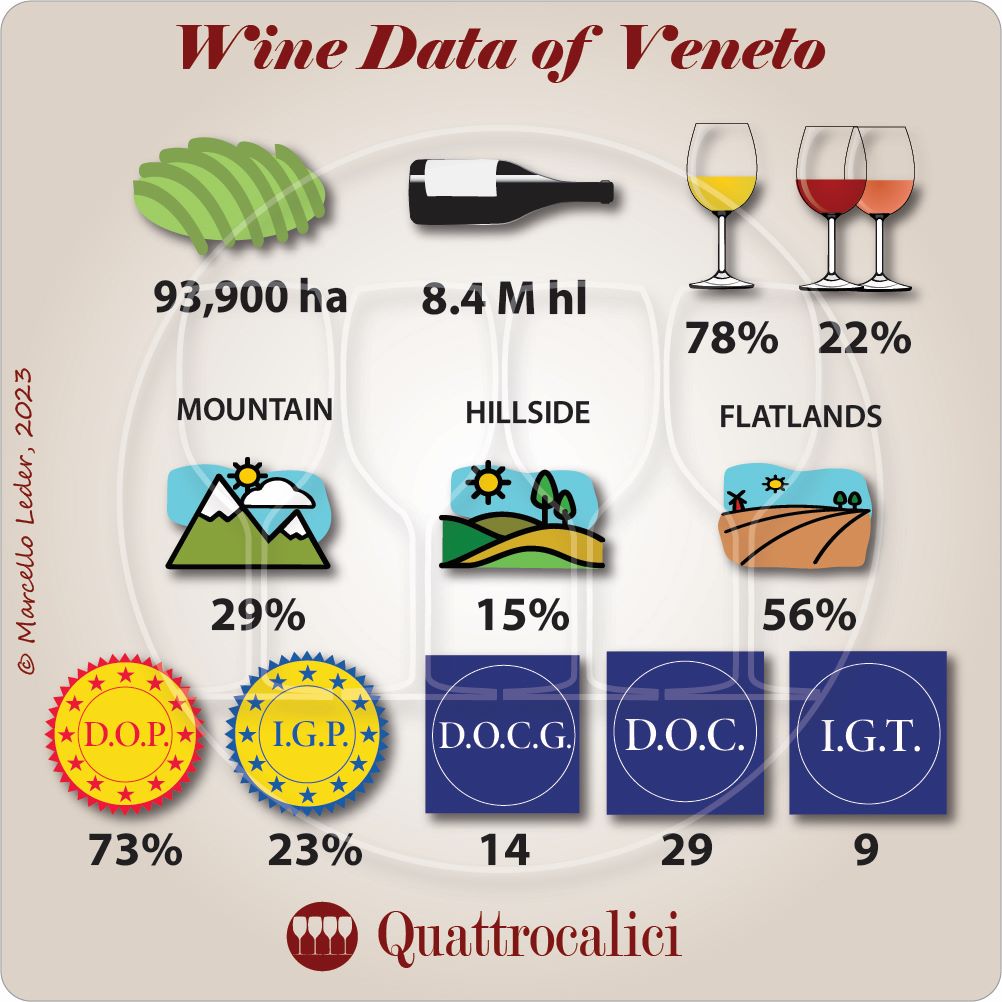
The Designations of Origin for wine in Veneto total 14 DOCGs, 29 DOCs, and 9 IGTs, reflecting the size and complexity of the region’s wine industry. Moving from east to west, in the area of the Hills of Garda Veronese and Valpolicella, we find the Bardolino Superiore DOCG, Amarone della Valpolicella DOCG, and their respective DOC fallbacks. Noteworthy is the interregional DOC of Lugana DOC, straddling the provinces of Verona and Mantova. In the volcanic hills between the provinces of Verona and Vicenza lies the Soave Superiore DOCG, Soave DOC, and Gambellara DOC area. The DOC Colli Berici, just south of Vicenza, is known for its reds based on international grape varieties and Tocai Rosso (which gives rise to Tai Rosso and Rosso di Barbarano). The DOC Breganze area, north of Vicenza, is known for its reds and whites based on the Vespaiola grape variety. In Padova, we find the Colli Euganei area with the DOCG Moscato Fior d’Arancio, while further south in the plains is the Friularo di Bagnoli DOCG. In the Treviso area, there are the DOCGs of Prosecco (Conegliano Valdobbiadene Prosecco DOCG and Colli Asolani Prosecco DOCG) and Colli di Conegliano DOCG. At the border with Friuli, another DOCG, Lison DOCG, stems from the DOC Lison Pramaggiore. Protecting agri-food products are 14 PDOs, among which Prosciutto Veneto Euganeo-Berico PDO and Sopressa Vicentina PDO, and 15 PGIs.

Wine areas of Veneto

Veneto, like all regions of Italy, is not only famous for its wines but also for several other typical products linked to the territory and protected by DOP and IGP designations of origin. Here is the complete list of Agri-food Designations of Origin for the Veneto region.

The most famous red wines in Veneto are those of Valpolicella, first and foremost Amarone. Amarone is produced with dried grapes from the Corvina, Rondinella, and Molinara varieties, the same as Recioto. Unlike Recioto, however, Amarone is a dry wine. The ripasso technique is used to give more body and softness to Valpolicella reds.

The area of Conegliano-Valdobbiadene and that of Montello-Colli Asolani are world-famous for the production of Prosecco. The name, once referred to the grape variety, now indicates a wine protected by designation of origin, while the starting grape variety was renamed Glera starting from 2009.

In Soave, near Verona but further east than Valpolicella, the most famous white wines of Veneto are produced, based on the indigenous Garganega and Trebbiano di Soave varieties. The classical zone includes only two municipalities, Soave and Monteforte d’Alpone, from which come the best white wines of this DOC.

In the Colli Euganei, in the province of Padova, white, red, and sparkling wines are produced, the most interesting of which is Fior d’Arancio, particularly the passito version, produced with Yellow Muscat grapes. The Colli Berici are known for the indigenous Tocai Rosso, a local clone of French Grenache, which has its highest expression in the Rosso di Barbarano type. In Breganze, white and red wines are produced, and the famous Torcolato, a sweet wine produced with Vespaiola grapes.

Among other important production zones, we remember Bardolino, whose wines are generally produced with the same grapes as Valpolicella, however, with different results in terms of structure and intensity. Bianco di Custoza is produced with a blend of various grape varieties of which the most important are Trebbiano Toscano, Garganega, and Bianca Fernanda, a local clone of Cortese. In Gambellara, Recioto di Gambellara, a sweet wine from Garganega grapes, is produced, alongside the more rare Vin Santo.

Regional Cuisine of Veneto

Veneto owes its traditional cuisine to the Serenissima (the Republic of Venice) and the variety of products that its trade helped spread across the territory. Among the appetizers, we remember sarde in saor (fried sardines with onion, seasoned with vinegar, sugar, and accompanied by pine nuts and raisins) and boiled granseola (served with garlic, oil, and parsley) as well as numerous DOP and IGP cured meats. Among the first courses, bigoli (egg pasta) replace spaghetti and are served with traditional sauces such as all’arna, with sardea (sardines) or luganega (sausage). Cansunziei are ravioli filled with pumpkin or spinach and cooked ham or chard (all’ampezzana) served with melted butter or smoked ricotta. Sopa coada is a rather dry pigeon pie, so much so that it is sometimes accompanied by a cup of boiling broth to consume separately or to pour over it. With rice, numerous dishes are prepared among which risi e bisi (boiled rice with peas) and minestra di risi e verze as well as many risottos. There is also a great variety among the second courses, frequently accompanied by the ubiquitous polenta (boiled cornmeal cream). Baccalà alla vicentina (cooked with oil, milk, garlic, anchovies, and onions) and seppie al tegame among the fish dishes, while among the meat dishes we remember faraona in tecia (in the pan), fegato alla veneziana (with onions, oil, butter, salt, and parsley), torresani (pigeons) on the spit, and pastissada de caval (horse stew) from Verona. There are numerous vegetables and cheeses with a designation of origin, among which we remember white asparagus of Bassano DOP, Asiago cheese, and Monte Veronese DOP, and many others. Among the desserts, in addition to the very famous pandoro of Verona, fritòle (fritters) and galani veneziani (fried chiacchiere sprinkled with icing sugar) and zalèti(cornmeal and raisin cookies) deserve a mention.

Quattrocalici Wine Guide