


Garganega is the most important white grape variety in the provinces of Verona and Vicenza, dominating the hills of the DOC Soave and Gambellara. Garganega has found in these two areas terroirs of choice that allow it to fully express its potential in both dry and sweet wines. Garganega benefits particularly from the typical volcanic soil of Soave, composed of basaltic rocks, rich in tuff and limestone inclusions. The Gambellara area is similarly characterized by a volcanic soil matrix, mainly composed of tuff and basalt, endowed with a rich composition of rocky materials and minerals. The characteristics of the soil and the particularly favorable sunlight on steep hillside slopes provide Garganega with all the elements to produce white wines, both dry and sweet, of the highest quality and distinct organoleptic profile.
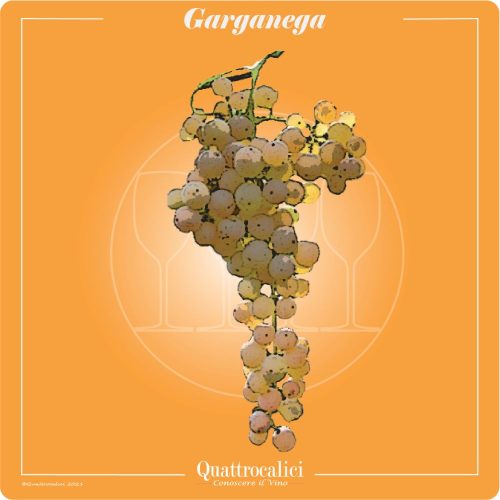
In its favored zones, the Garganega grapevine is usually cultivated according to the historic Veronese pergola system, as the plant itself prefers expanded training systems. Garganega is easily recognizable for its particularly large clusters, small leaves, and medium-sized berries, with a thin but sturdy, particularly waxy skin of a characteristic golden yellow color. Its productivity is high and consistent, and it has good resistance to most of the common fungal diseases, which has ensured it was never abandoned. Garganega matures late, and its harvest generally takes place between the end of September and the beginning of October. Garganega is not highly aromatic, but has a rich bouquet, including almond and white flowers. It is not characterized by high acidity but rather by a balance of extracts and sugars. These characteristics make Garganega suitable for the production of various types of wine, from still dry wines to sweet raisin wines like Recioto and Vin Santo di Gambellara DOC.
