


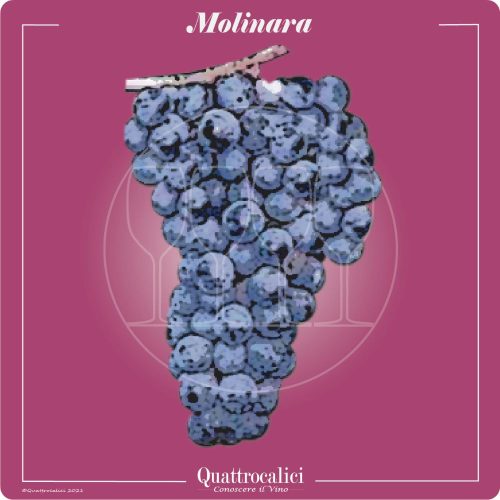
The Molinara grape variety is an indigenous variety from the province of Verona, particularly in the Valpolicella region, but it is also cultivated in the areas straddling Veneto and Lombardy. The origins of Molinara are uncertain, and it seems that its name derives from the dialect term “mulinara” (from mill), because the berries of this grape are abundantly pruinose, appearing almost as if dusted with flour. More frequently, Molinara grapes are vinified together with other grape varieties to produce the renowned wines of Valpolicella. Since the 1800s, this grape variety has been cultivated in Valpolicella, Valpantena, and Valle d’Illasi, where it has taken on different names such as “Rossara” or “Rossanella” in the Lake Garda area, or “Brepon” in Valpantena, and is often also called “Ua salà” (salty grape, due to its savory taste).
In 2008, a debate among various producers emerged, pitting innovators against traditionalists regarding the mandatory use of Molinara in the Valpolicella DOC regulations. Ultimately, a compromise was reached: the mandatory use of Molinara grapes was removed, and they were classified as “permitted” grapes in the regulations, receiving approval from the Ministry of Agriculture. Molinara vinified on its own produces a wine of light cherry red color, with fresh and fruity aromas, prominently featuring berry notes. The wine has a light body, limited alcohol content and acidity, and is noted for its pronounced savoriness. During fermentation, the skins are typically left in contact with the must for only a short period, resulting in a wine with a fairly intense pink color.
