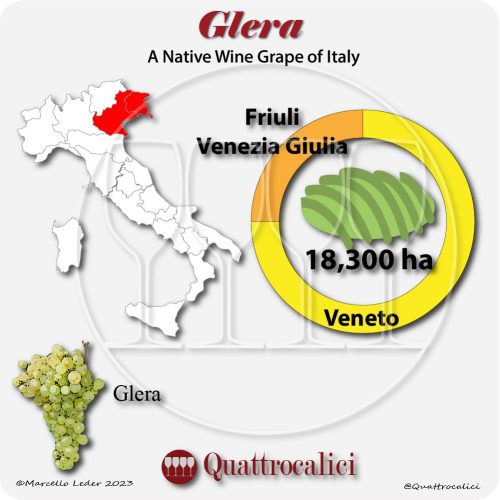



Glera is the grape variety used for the production of Prosecco wine. With the D.M. 21/07/2009, the grape variety previously known as Prosecco was renamed Glera, while the DOC Prosecco was simultaneously created. The operation aimed to protect the denomination of origin of Prosecco. The term Prosecco referring to a grape variety rather than a denomination would have rendered its protection ineffective. Glera is historically widespread in almost all provinces of the Veneto region. Its cultivation has also expanded in recent years to Friuli Venezia Giulia, especially after the establishment of the DOC Prosecco, although its homeland remains the Trevigiano area and particularly the complex hill system between Conegliano and Valdobbiadene. Glera is an ancient grape variety, already cultivated during Roman times.
One hypothesis suggests that Glera originated from Prosecco, a small municipality in the Karst region of Trieste, from where it spread to the Marca Trevigiana and reached the Colli Euganei. Another hypothesis suggests it started from the Colli Euganei (where it is known as Serprino) and gradually spread towards Slovenia. Glera is an excellent grape for sparkling wine production, forming the base of Prosecco DOC, Asolo DOCG, and Conegliano-Valdobbiadene Prosecco DOCG. Besides being one of the most well-known Italian sparkling wines, it is also one of the best-selling wines worldwide. The grape expresses different notes depending on climatic conditions and soil types. In the hilly area of Valdobbiadene, floral and fruity notes prevail. In the mid-hill area south of Vittorio Veneto, citrus and green apple scents are prominent. Floral notes and fresh fruitiness are typical of areas with rocky and loose soils in the plains.