The Trentino-Alto Adige region, located in the northeast of Italy, is known for its unique and high-quality viticulture, thanks to its particular geography, soil composition, and climate. This region stands out for the diversity of its landscapes, ranging from river valleys, to mountain slopes, up to high altitudes, offering a mosaic of microclimates and ideal soils for vine cultivation.
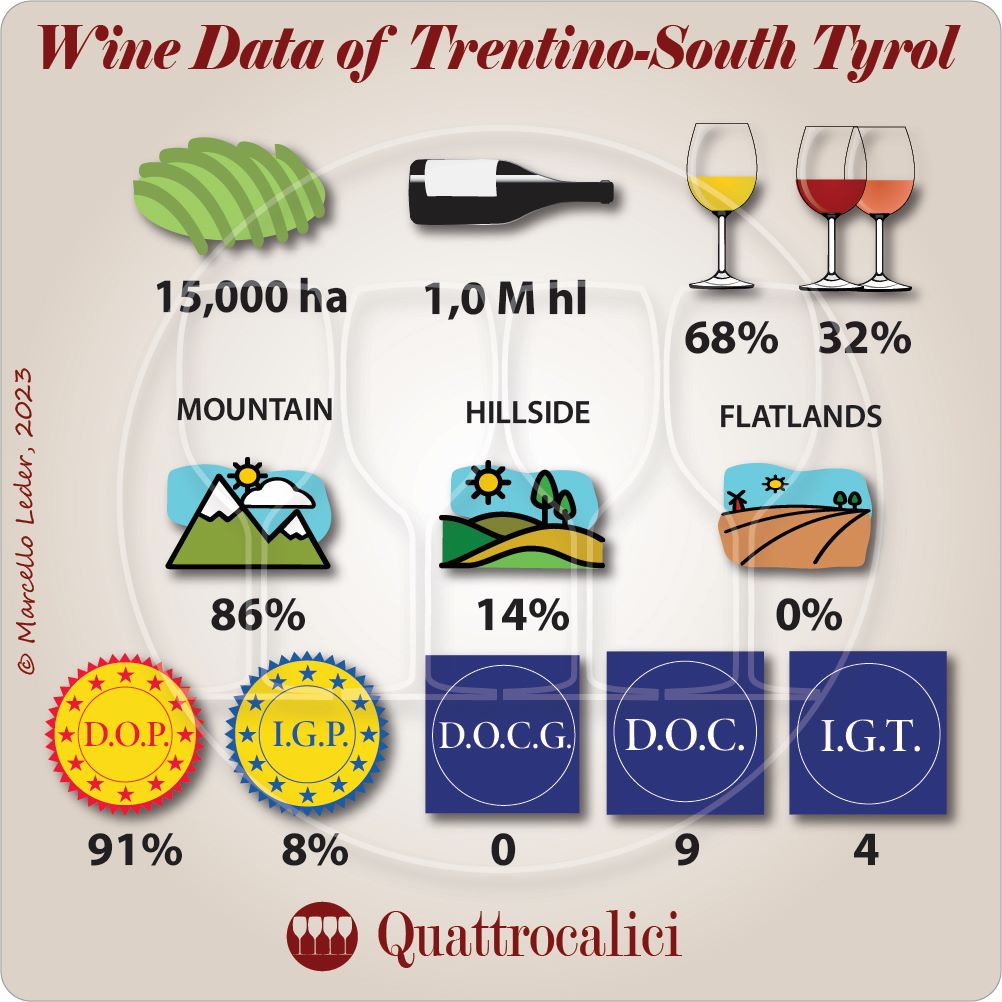
Trentino-Alto Adige is characterized by a very varied topography. The Trentino area, to the south, benefits from gentle hills and open valleys, ideal for viticulture. Here, the soils are a mix of limestone, clay, and gravel, derived from the disintegration of Alpine rocks, which drain well and reflect heat, favoring the ripening of grapes.
Alto Adige, on the other hand, presents a more mountainous and valley landscape, with vineyards climbing the slopes of the valleys, exploiting optimal sun exposures. The soils vary greatly, from sand to clay, to limestone and river deposits, which influence the character and aromatic profile of the produced wines.
The climate of Trentino-Alto Adige is strongly influenced by its geographical position, being at the meeting point between Mediterranean and continental climate influences. This climatic dualism results in warm and sunny summers, but not excessively hot, thanks to the constant ventilation flowing along the valleys, and cold winters that help maintain the acidity and freshness of the grapes.
The effect of mountain barriers protects the vineyards from cold northern winds, while the opening to the south guarantees good sun exposure. The temperature differences between day and night, especially during the ripening phase, are crucial for developing and maintaining the aroma of the grapes.
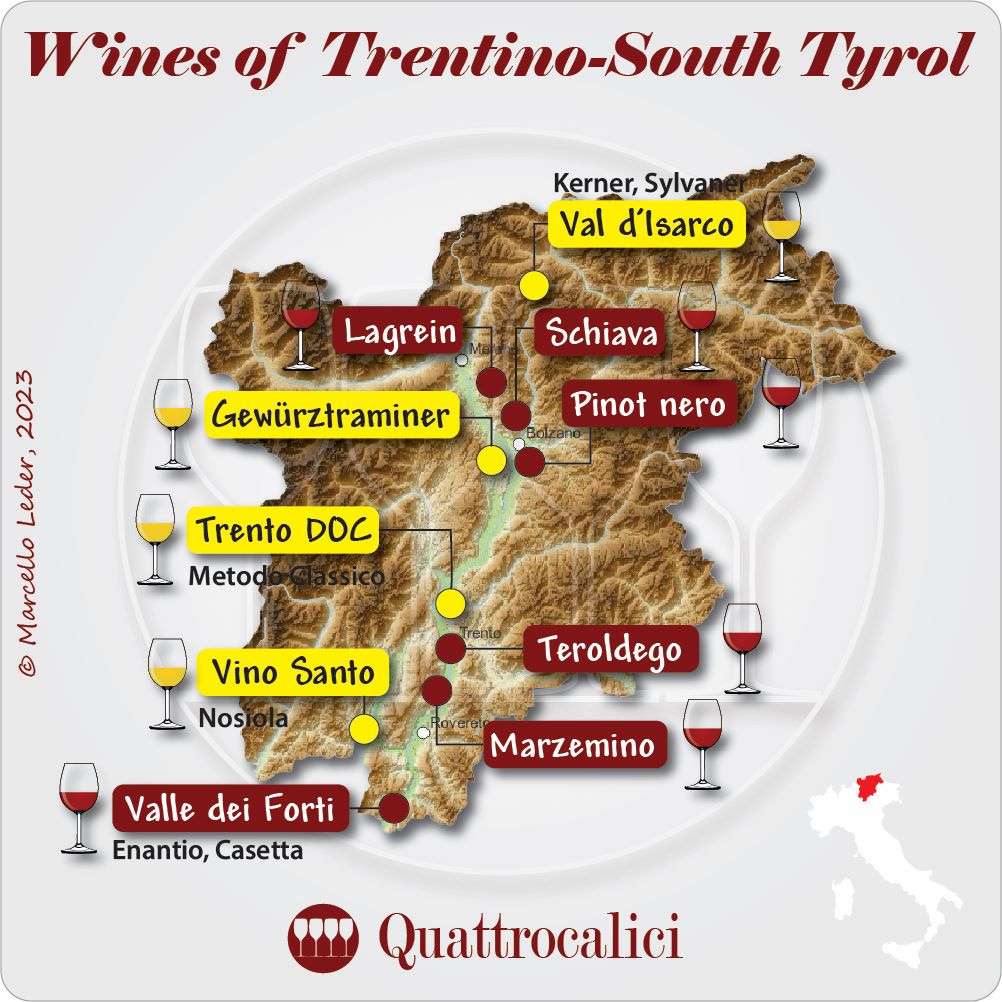
This unique combination of natural factors allows Trentino-Alto Adige to produce high-quality wines of great variety. The region is famous for its aromatic and fresh white wines, like Gewürztraminer, Pinot Grigio, and Chardonnay, reflecting the elegance and freshness conferred by the Alpine climate. However, there are also excellent examples of red wines, like Teroldego Rotaliano and Lagrein, which express intensity, body, and structure, thanks to the specific pedoclimatic conditions of the cultivation territories.
Viticulture in Trentino-Alto Adige is also characterized by its sustainability and attention to quality rather than quantity. Soil processing, vineyard management, and winemaking techniques are carefully calibrated to respect the environment and enhance the peculiarities of each grape variety, in a perfect balance between tradition and innovation.