

The Best Tool to Learn about Italian Wine

italian wine regions - quattrocalici

Wine in Friuli Venezia Giulia

local grapes, wine, and food

wine in friuli-venezia giulia

The Friuli-Venezia Giulia region has long been celebrated as the homeland of exquisite white wines. The reputation of these wines, despite their varied styles and expressions, has soared to such heights that some have taken to calling them “superwhites.” This acclaim is not only due to the success of international grape varieties, which have found ideally suited production areas here, but also to the significant presence of native grape varieties. These indigenous grapes, with their distinctive wines, define the oenological identity of Friuli-Venezia Giulia. The region can be ideally divided into three areas: the flatlands covering the province of Pordenone and part of the province of Udine, home to the Grave DOC and the lowland DOCs of Aquileia, Annia, and Latisana; the north-eastern part of the province of Udine and the province of Gorizia, featuring the DOCs Isonzo, Colli Orientali del Friuli, and Collio; and finally, the Giuliana area with the Carso DOC. Each of these macro-areas is characterized by its own style of wines and specific indigenous grape varieties.

Friuli-Venezia Giulia has also been the stage for a notable dispute at the European level, involving a controversy with Hungary over the right to continue using the name Tocai for wine produced from the Tocai Friulano grape variety. In Hungary, there exists a protected designation of origin called Tokaji, named after a small village near the border with Ukraine, renowned for its sweet wines. Italy lost this legal battle in 2007, resulting in the stipulation that although the Tocai Friulano grape could retain its name, the wines it produces must henceforth be called “Friulano” in Friuli-Venezia Giulia and “Tai” in Veneto. This defeat was somewhat offset by a victory in protecting the name Prosecco, which was safeguarded with a specific DOC designation in 2009. This new DOC is named after the village of Prosecco in the province of Trieste, which, despite having little to do with the production of the traditional sparkling wine previously unknown in the area, has allowed for the name to be protected at the denomination level. From that point forward, the grape variety long known as “Prosecco” was renamed “Glera,” reviving an ancient Slovenian name for the grape.

Wine figures of Friuli Venezia Giulia

wines of friuli-venezia giulia

Viticolture in Friuli Venezia Giulia

The Friuli-Venezia Giulia region is geographically situated at the crossroads of Europe, bordered to the north by Austria, to the east by Slovenia, to the west by the Veneto region, and to the south by the Adriatic Sea. This strategic location results in a diverse topography that transitions from north to south, beginning with a mountainous area composed of the Carnic and Julian Alps, followed by a hilly region within the pre-Alpine arc stretching from Veneto to Slovenia, and finally, a flat plain. The plain, formed by alluvial deposits, features gravelly soil in its northern part, specifically in the areas known as Grave and Magredi. These lands, abundant in pebbles, are especially suited for the cultivation of white grape varieties. In contrast, the southern part of the region, along the coastal strip, is dominated by sandy and clayey soils, which are more conducive to the cultivation of black grape varieties.

Moving eastwards, the plain extends up to the foothills of the Karst Plateau, an arid, limestone highland north of Trieste, characterized by its calcareous rocks eroded by water. Viticulture in this challenging environment is often only feasible on “pastini,” which are terraces supported by retaining walls made of sandstone blocks. The unique geological makeup and the climatic conditions of this area contribute significantly to the distinctiveness of the wines produced here, highlighting the region’s diverse viticultural potential.

History of Winemaking in Friuli Venezia Giulia

Due to its geographical location, Friuli-Venezia Giulia has been a region of territorial disputes since the time of the Romans, followed by the Byzantines, Venetians, and Habsburgs. Many of the grape varieties found in the region owe their dissemination to the various peoples who settled there. The area was initially conquered by the Romans, who named it Forum Julii, making Aquileia one of the most significant cities in the Empire at that time. Important accounts, such as those by Pliny the Elder, attest to the quality of the region’s wines. Grape cultivation and wine production continued to develop throughout the Venetian and then Habsburg dominations, until the advent of phylloxera towards the end of the 1800s. It was during this period that international grape varieties began to be widely planted in Friuli-Venezia Giulia, eventually overshadowing the production of native species. More recently, there has been a revaluation of the regional ampelographic heritage, and many of the region’s most prized wines now come from native grape varieties. This resurgence in interest towards indigenous varieties reflects a broader trend in the wine world towards celebrating and preserving local wine-making traditions and the unique expressions of specific terroirs.

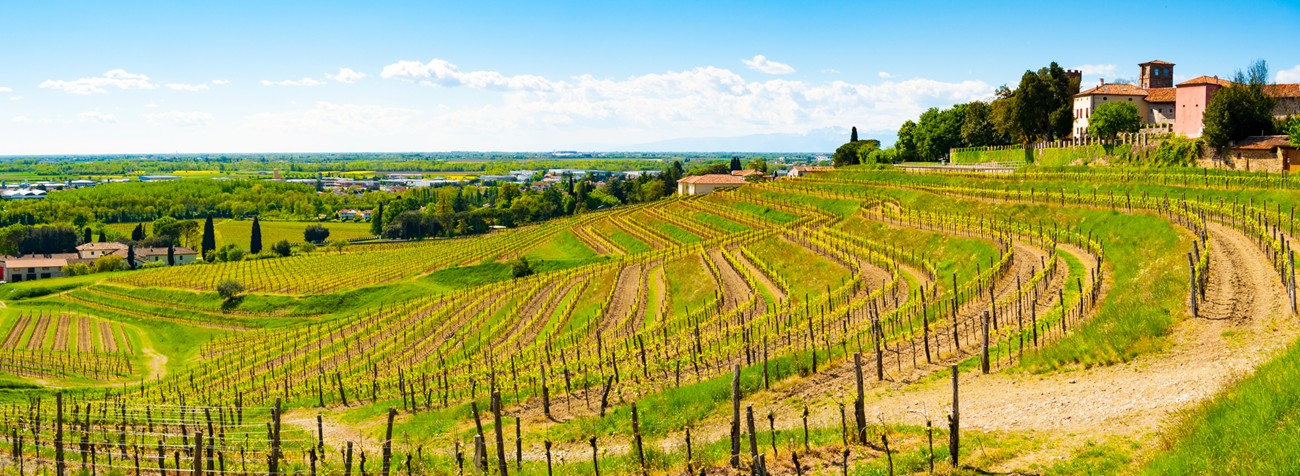
Vineyards in Collio area
Vineyards surrounding the Buttrio Castle Image: Depositphotos.com

Wine grapes of Friuli Venezia Giulia

Friuli-Venezia Giulia has long been renowned for its rich heritage in native grape varieties, a diversity that has been further enriched over time by the introduction of international grape varieties. Varietals such as Chardonnay, Sauvignon blanc, Merlot, Cabernet Franc, and Pinot Noir were introduced in the 19th century during the Habsburg rule. Native grape varieties distinctive to Friuli-Venezia Giulia include Tocai Friulano, Verduzzo Friulano, Picolit, Refosco dal Peduncolo Rosso, Schioppettino, Pignolo, and Tazzelenghe. Ribolla Gialla and Malvasia Istriana, although present in the region for centuries, were likely introduced in the 13th century. Other varieties such as Gewürztraminer, Müller-Thurgau, Riesling Renano, and Riesling Italico, along with Franconia (Blaufränkisch), were introduced to Friuli from Austria. In the Venezia Giulia area, specifically in the Karst hills in the hinterland of Trieste, traditional cultivation includes the native black grape variety Terrano and the white grape variety Vitovska. This blend of native and international grape varieties contributes to the region’s unique viticultural landscape, offering a wide range of wine styles and flavors that reflect the area’s rich historical and cultural tapestry.

Wine appellations of Friuli Venezia Giulia

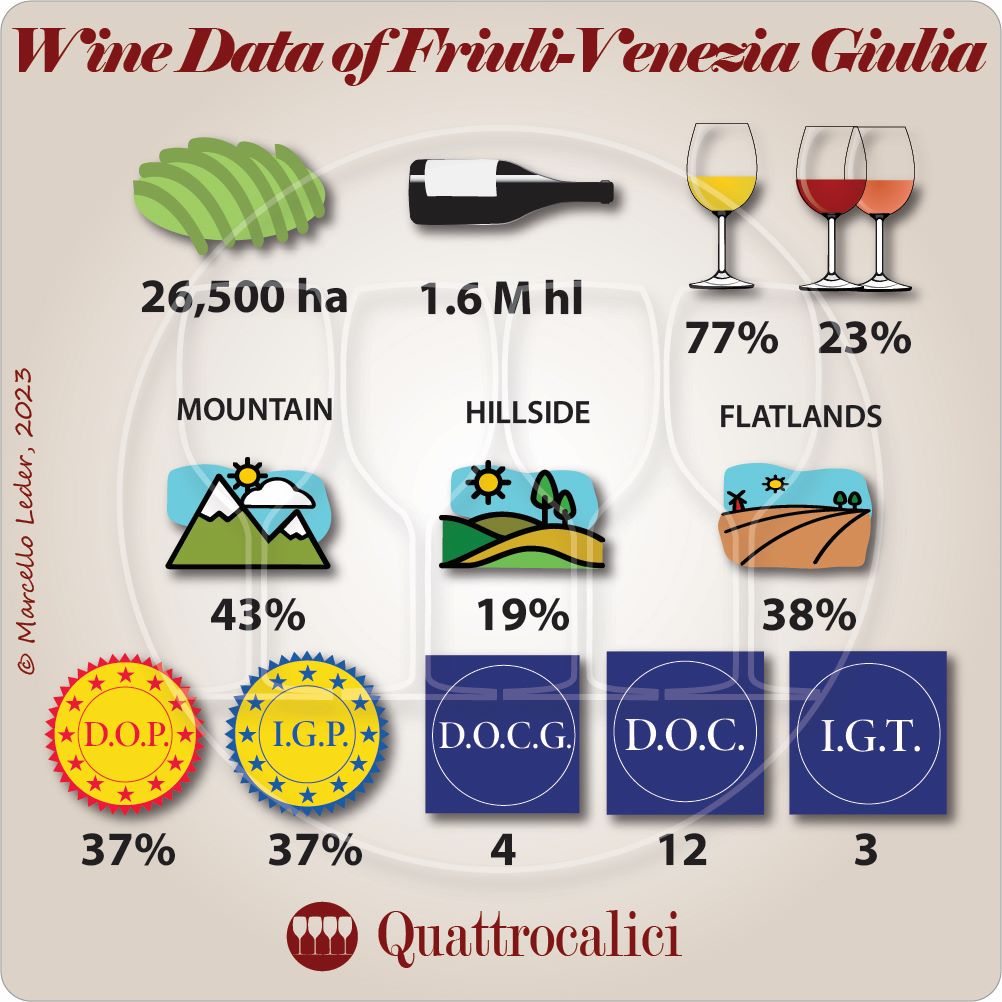
Friuli-Venezia Giulia‘s wine designations currently include four DOCGs (Denominazioni di Origine Controllata e Garantita), twelve DOCs (Denominazioni di Origine Controllata), and three IGTs (Indicazioni Geografiche Tipiche). The Lison DOCG, dedicated to wines made from the Tocai Friulano grape variety, is “interregional”, spanning both the Friuli-Venezia Giulia and Veneto Italian administrative regions. The Colli Orientali del Friuli area, located to the northwest in the province of Udine, is renowned for producing one of Italy’s most sought-after and celebrated dessert wines, Picolit, which stars in the region’s second DOCG, Colli Orientali del Friuli Picolit DOCG. Another sweet wine is made from Verduzzo Friulano grapes, either dried (passito) or harvested late (vendemmia tardiva), celebrated under the Ramandolo DOCG denomination.

The Colli Orientali del Friuli primarily produces white wines, especially from Tocai Friulano, Sauvignon Blanc, and Chardonnay grapes, all included in the third DOCG of Friuli, the Rosazzo DOCG. The Friuli Colli Orientali DOC designation, with its five sub-zones, encompasses all the white and red wines of this significant wine-producing area. The Collio zone, located in the eastern part of the region in the province of Gorizia, is particularly famous for its white wines. Tocai Friulano and Ribolla Gialla are the most important grape varieties grown here, complemented by international varieties such as Chardonnay and Sauvignon Blanc. These grapes are used to produce both varietal wines and interesting blends that harmoniously merge the characteristics of different grape varieties. Collio also produces red wines, particularly from Merlot, Cabernet Franc, and Cabernet Sauvignon grapes, all included in the Collio or Collio Goriziano DOC denomination.

The Grave area, or Friuli Grave DOC, is the region’s largest denomination and stretches from the province of Udine westwards to the province of Pordenone. Its name derives from the terrain, rich in stones and gravel, conducive to producing excellent wines and representing over two-thirds of the region’s wine production. While Grave wines generally have less complexity compared to those from Collio or Colli Orientali del Friuli, the average quality level of wines from this denomination is among the highest in Italy. In the Grave area, white wines are produced from Chardonnay, Sauvignon Blanc, and Tocai Friulano grapes, while red wine production primarily involves international varieties such as Merlot, Cabernet Sauvignon, and Cabernet Franc, along with the native Refosco dal Peduncolo Rosso grape.

The Friuli Isonzo DOC denomination is also noteworthy, producing wines reminiscent of those from Collio, located to the south of that area. The wines, primarily white, are made from Tocai Friulano, Chardonnay, and Sauvignon blanc grapes. Red wines are produced with Merlot and Cabernet Sauvignon grapes. In the southern, flat part of the region, the DOCs Annia and Latisana produce predominantly white wines, directly influenced by the maritime climate.

Wine areas of Friuli Venezia Giulia

Friuli-Venezia Giulia is a region that produces both white and red wines, with rosé wines being very rare in the area. Wines made from Verduzzo Friulano and Picolit grapes are among the most famous Italian dessert wines. Currently, the region boasts four DOCG, twelve DOC, and three IGT classifications. Let’s take a closer look at some of the most important wine-producing areas in the region.

Collio or Collio Friulano

The Collio area, located in the eastern part of the region in the province of Gorizia, is especially renowned for its white wines. Tocai Friulano and Ribolla Gialla are the most important grape varieties cultivated here, alongside international varieties like Chardonnay and Sauvignon Blanc. These grapes are used to produce both varietal wines and interesting blends, harmoniously merging the characteristics of the different grape varieties. The Collio also produces red wines, particularly from Merlot, Cabernet Franc, and Cabernet Sauvignon grapes.

Colli Orientali del Friuli

The Colli Orientali del Friuli area is the second most famous and important in Friuli-Venezia Giulia, located to the northwest in the province of Udine. This area is known for producing one of Italy’s most sought-after and celebrated dessert wines, Picolit. Another sweet wine is made from Verduzzo Friulano grapes, either dried or harvested late. Like in Collio, the production in Colli Orientali del Friuli primarily focuses on white wines, especially from Tocai Friulano, Sauvignon Blanc, and Chardonnay grapes. The red wines from Colli Orientali del Friuli are made from international grape varieties, such as Merlot, Cabernet Franc, Cabernet Sauvignon, and Pinot Noir, with interesting native black grape varieties including Schioppettino, Refosco dal Peduncolo Rosso, Tazzelenghe, and Pignolo.

Friuli Grave

The Grave area, or Friuli Grave DOC, is the largest denomination in the region, extending from the province of Udine westwards to the province of Pordenone. Its name derives from the terrain, rich in stones and gravel, conducive to producing excellent wines and representing over two-thirds of the region’s wine production. The wines from Grave generally have less complexity compared to those from Collio or Colli Orientali del Friuli, yet the average quality level of wines from this denomination is among the highest in Italy. In the Grave area, white wines are produced from Chardonnay, Sauvignon Blanc, and Tocai Friulano grapes, while red wine production primarily involves international varieties like Merlot, Cabernet Sauvignon, and Cabernet Franc, along with the native Refosco dal Peduncolo Rosso grape.

Ramandolo

Before 2001, the Ramandolo area was a sub-zone of the Colli Orientali del Friuli DOC. In that year, it was proclaimed the region’s first DOCG, which now (as of 2018) totals four. The area produces the eponymous sweet wine from Verduzzo Friulano grapes, using both dried and late-harvest grapes.

Other Production Areas

The Friuli Isonzo DOC denomination is also significant, producing wines reminiscent of those from Collio and located to the south of that area. The wines, primarily white, are made from Tocai Friulano, Chardonnay, and Sauvignon blanc grapes. Red wines are produced with Merlot and Cabernet Sauvignon grapes. In the southern, flat part of the region, the DOCs Annia and Latisana are found, where predominantly white wines are produced, directly influenced by the maritime climate.

Regional Cuisine of Friuli Venezia Giulia

The cuisine of Friuli-Venezia Giulia mirrors the soul of its two distinct territories: the Carnic and subalpine region, and the Adriatic coastal area. For starters, the cured meats selection boasts the renowned Prosciutto di San Daniele DOP and Prosciutto di Sauris IGP. Other typical appetizers include Triestine-style spider crab and smoked trout. The “first course” options feature soups such as Carsolina (with eggs and flour), Jota (a hearty bean, potato, and sauerkraut soup), and Rice and potato soup among others. The Adriatic coast is celebrated for its fish Brodetto, while pasta dishes include Carnia-style agnolotti (filled with ricotta and spinach) and Timau’s cialzon (pasta filled with potatoes, raisins, and herbs, dressed with smoked ricotta and melted butter). A regional favorite is Gnocchi affogati, served with a minced meat and liver sauce, alongside numerous Seafood risottos.

For main courses, there’s a clear distinction between the typically alpine meat dishes and the coastal fish-based specialties. Among the former are Baked veal shank, Carnian-style calf’s head (boiled, sliced, and served with sauce), Austro-Hungarian goulash, pork in raspberry sauce, Toc de purcit (pork stew with liver, flavored with cinnamon and cloves), and Frico (a dish made of Montasio cheese fried in butter, with potatoes and onions). Noteworthy game dishes include Bohemian-style hare (stewed with herbs) and marinated venison, often accompanied by the traditional polenta pastizzada (made by adding milk and butter to yellow flour and water).

Seafood dishes feature baby cuttlefish stuffed with spider crab meat, mantis shrimps in sauce, and gratinated scallops. Among the side dishes, notable are Brovada DOP (turnips fermented in grape marc and sliced into strips) and “Tecia” potatoes. Dessert highlights include Gubana (a yeasted cake filled with raisins, pine nuts, walnuts, and candied lemon and orange peel), Presnitz (a typical Triestine pastry rolled with a filling of nuts, almonds, pine nuts, figs, prunes, apricots, raisins, grated chocolate, sugar, cinnamon, cloves, and rum), Strucolo (a strudel, available in sweet apple or savory spinach versions), and Pinza, a winter cake made from stale bread, milk, sugar, eggs, dried fruit, raisins, apples, and fennel seeds. A special mention goes to the “Esse” biscuits from Raveo, known for their distinctive curved shape.

Quattrocalici Wine Guide