


Tazzelenghe is an indigenous black-skinned grape variety from Friuli-Venezia Giulia, originating from the area around Buttrio and Cividale, in the province of Udine. In the past, it was highly appreciated, especially for its suitability for aging in wood, and it was widely cultivated throughout the region. Following a period of decline, which affected most black grape varieties in Friuli, it has been revived and is now cultivated in the hilly areas of its origin. The name derives from the Friulian dialect, meaning “tongue cutter,” a clear reference to the wine’s character on the palate, marked by high acidity and pronounced tannins, which combine to create a decidedly astringent sensation, as if it were “cutting the tongue.” Recent DNA studies have revealed its genetic similarity to the Refosco Nostrano.
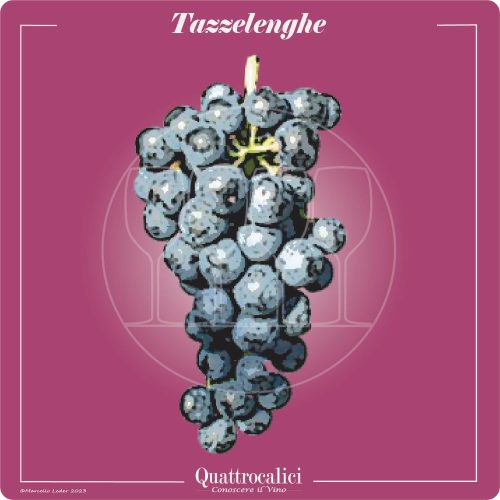
The Tazzelenghe’s germination, flowering, and veraison occur in mid-to-late seasons. Its clusters are medium-sized, cylindrical, sometimes winged, and moderately compact. The berries are medium to large, spheroidal with a slightly flattened shape, and have pruinose skins of a bluish-black, almost violet color.
When Tazzelenghe is vinified in purity, it produces high-quality wines that require aging due to their high tannin content. Tazzelenghe wines are often aged in oak barrels, which enhance their broad and pleasant bouquet. Tazzelenghe is a challenging grape variety to “tame,” and if the must is allowed extended maceration, the wine fully lives up to its nickname as a “tongue cutter.”
Nonetheless, Tazzelenghe produces a wine with strong personality, evoking powerful sensations: it is a wine you either love or leave. Its ideal pairing is with red meats or game.
