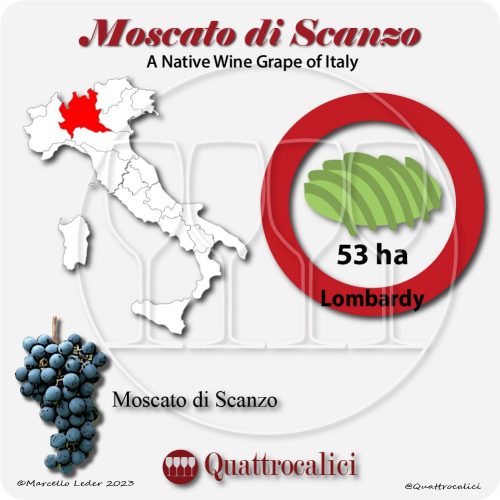


Following the post-phylloxera crisis in the early 20th century, the cultivation of Moscato di Scanzo was drastically reduced, and by the 1970s, the variety was at risk of extinction. Starting in the 1980s, the cultivation of Moscato di Scanzo, which until then was mainly done on an amateur level, saw significant growth, thanks in part to clonal selection efforts that led to its registration in the Italian Registry of Grape Varieties for wine production in 1981.
The grapes are dried and then vinified to produce Moscato di Scanzo DOCG. The Moscato di Scanzo DOCG designation was established in 2009, evolving from the DOC created in 2002 (which was previously a subzone of the Valcalepio DOC). Moscato di Scanzo wines are characterized by a deep ruby red color, full body, and intense aromatic profile. The finest examples have aromas reminiscent of dried sage and rose, maraschino cherries, acacia honey, and are enriched with sweet spicy notes of cinnamon, cloves, and licorice. On the palate, Moscato di Scanzo wines are persistently sweet and possess a rich intensity similar to that of Port.
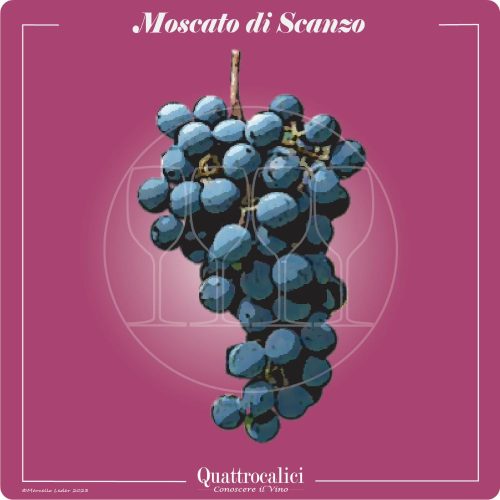
The Moscato di Scanzo grape has medium, five-lobed leaves, and its clusters are medium-sized, winged, and loose. The berries are oval, medium-sized, and blue-black in color, covered with abundant bloom. It thrives on well-exposed, dry hillside terrain and achieves the best quality results when grown on the “Sass de la Luna,” a grayish-blue calcareous marl formation that surfaces in the Lombardy basin.