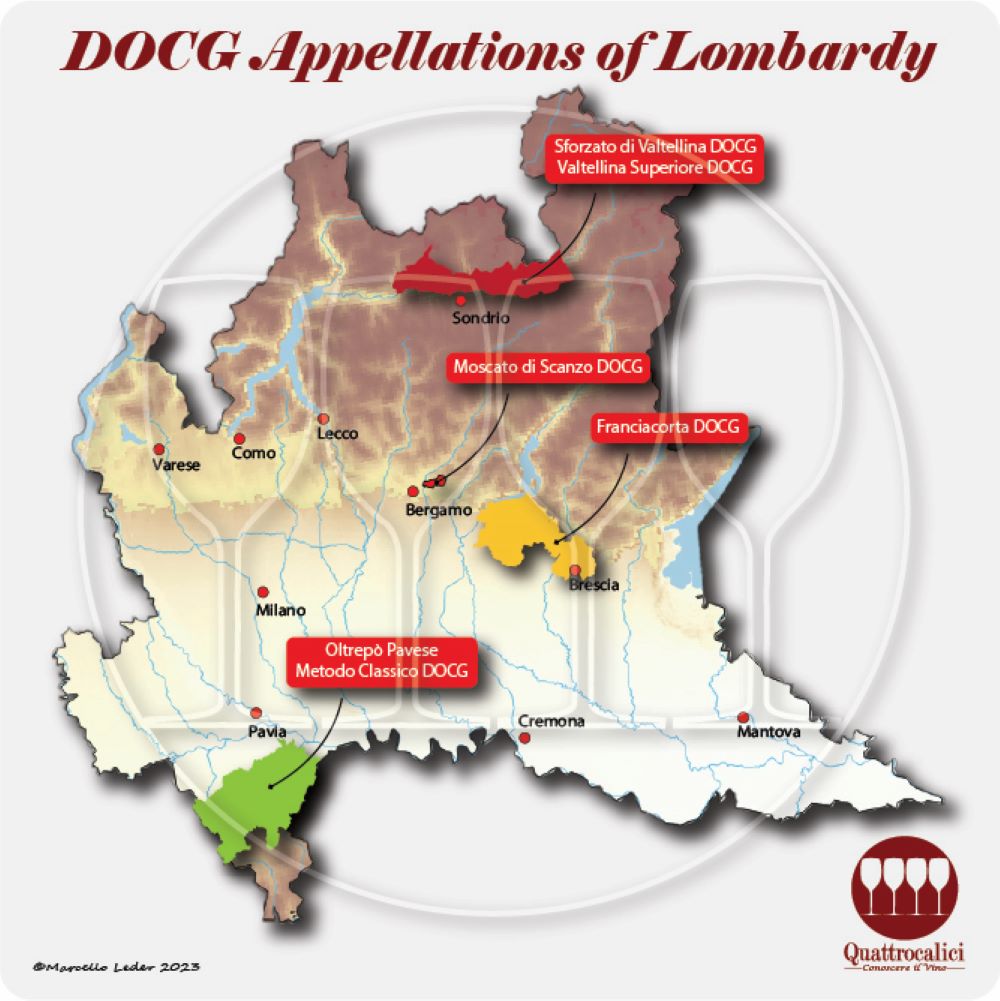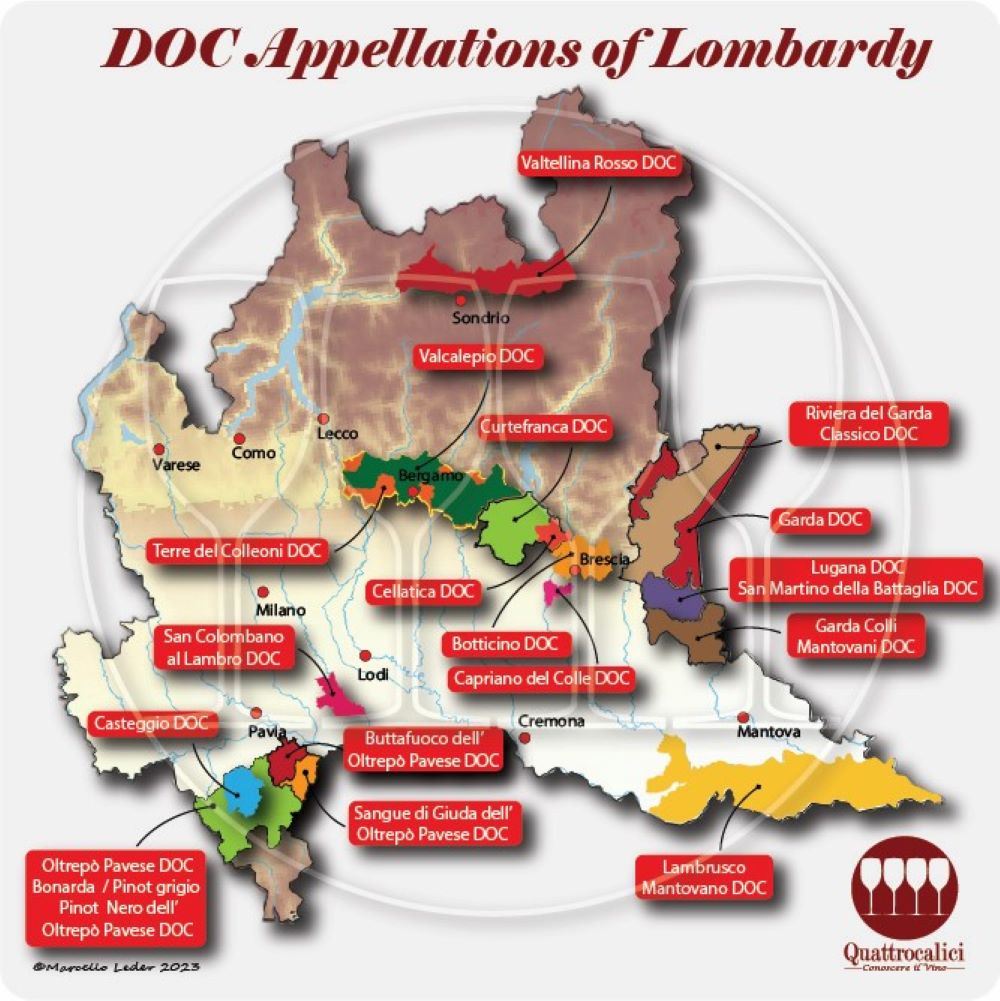


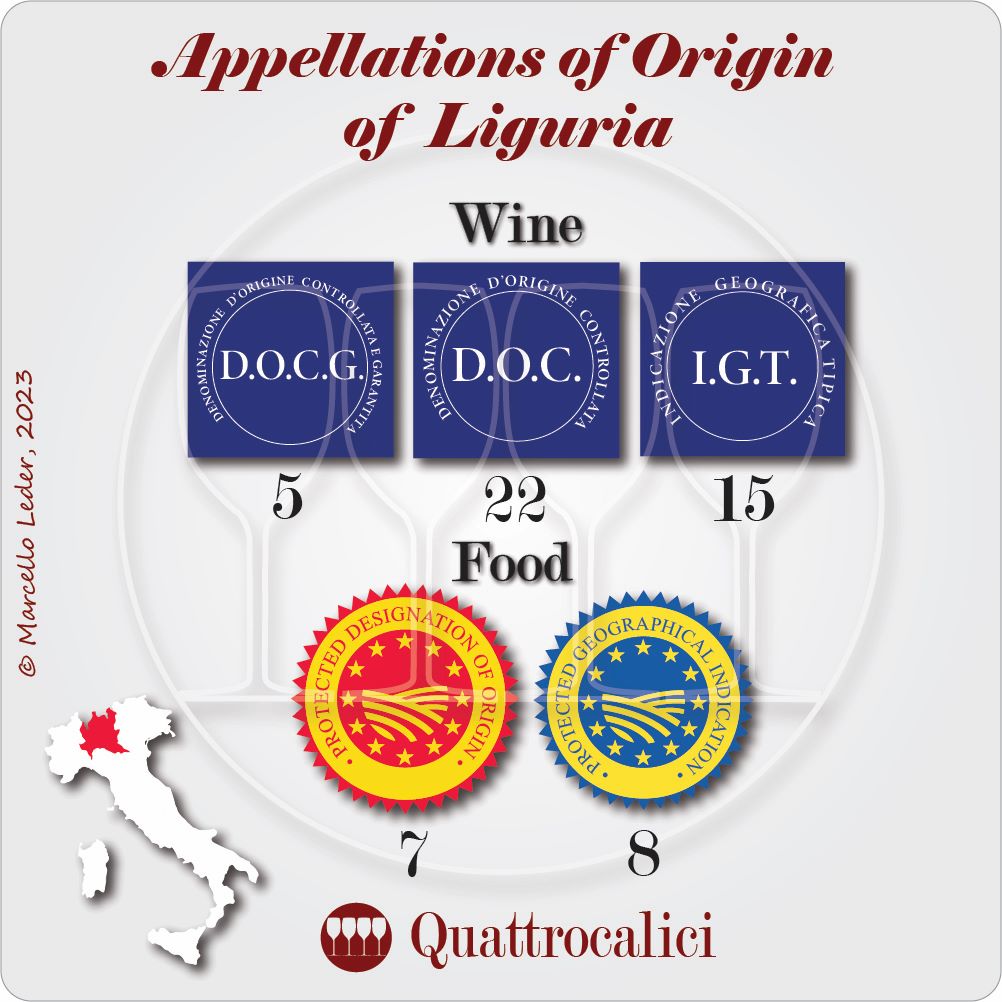
Lombardy’s regional wine production is characterized by a considerable number of Designations of Origin, reflecting the diversity and richness of its viticultural heritage.
At the northern end, Valtellina boasts notable DOCGs such as Sforzato di Valtellina o Sfursat di Valtellina DOCG, made from partially dried Nebbiolo grapes, and Valtellina Superiore DOCG. The latter, always based on Nebbiolo, is further divided into five sub-zones, each contributing to the complexity and variety of the region’s red wines.
Oltrepò Pavese has recently emerged as a center of excellence for sparkling wine production, especially noted for the Oltrepò Pavese Metodo Classico DOCG. Oltrepò Pavese also hosts other DOCs for Pinot Nero, Pinot Grigio, Sangue di Giuda, and Buttafuoco. These last two, red wines, are available in both sweet and dry versions, primarily derived from Croatina, Uva Rara, Ughetta, and Vespolina grape varieties.
Internationally recognized for its traditional method sparkling wines, Franciacorta DOCG sets the standard in this category. The same area under the Curtefranca DOC label also produces still wines using Cabernet Franc, Cabernet Sauvignon, Merlot, alongside its traditional sparkling wine grape varieties.
Garda DOC and Garda dei Colli Mantovani DOC highlight wines primarily made from Groppello, Barbera, Marzemino, and Sangiovese grapes. The integration of Riviera del Garda Bresciano DOC, Valtenesi DOC, and the classic subzone of Garda DOC in 2017 into the Riviera del Garda Classico DOC reflects the area’s dynamic regulatory landscape. The Garda DOC continues without the classic subzone and the specific wine types based on the Groppello grape.
Lambrusco Mantovano DOC and Lugana DOC emphasize, respectively, sparkling reds from the Lambrusco grape, particularly Lambrusco Viadanese, and white wines from the Trebbiano di Lugana variety. Lugana DOC, shared with the province of Verona, is renowned for its structured white wines.
Other Lombard wine areas are the San Colombano al Lambro DOC, located between Pavia and Milan, shares grape varieties with Oltrepò Pavese, while Valcalepio DOC, nestled between the Bergamo area and Lake Iseo, is known for red native varieties including Moscato di Scanzo, leading to the Moscato di Scanzo DOCG dedicated to the sweet red wine produced from dried grapes.