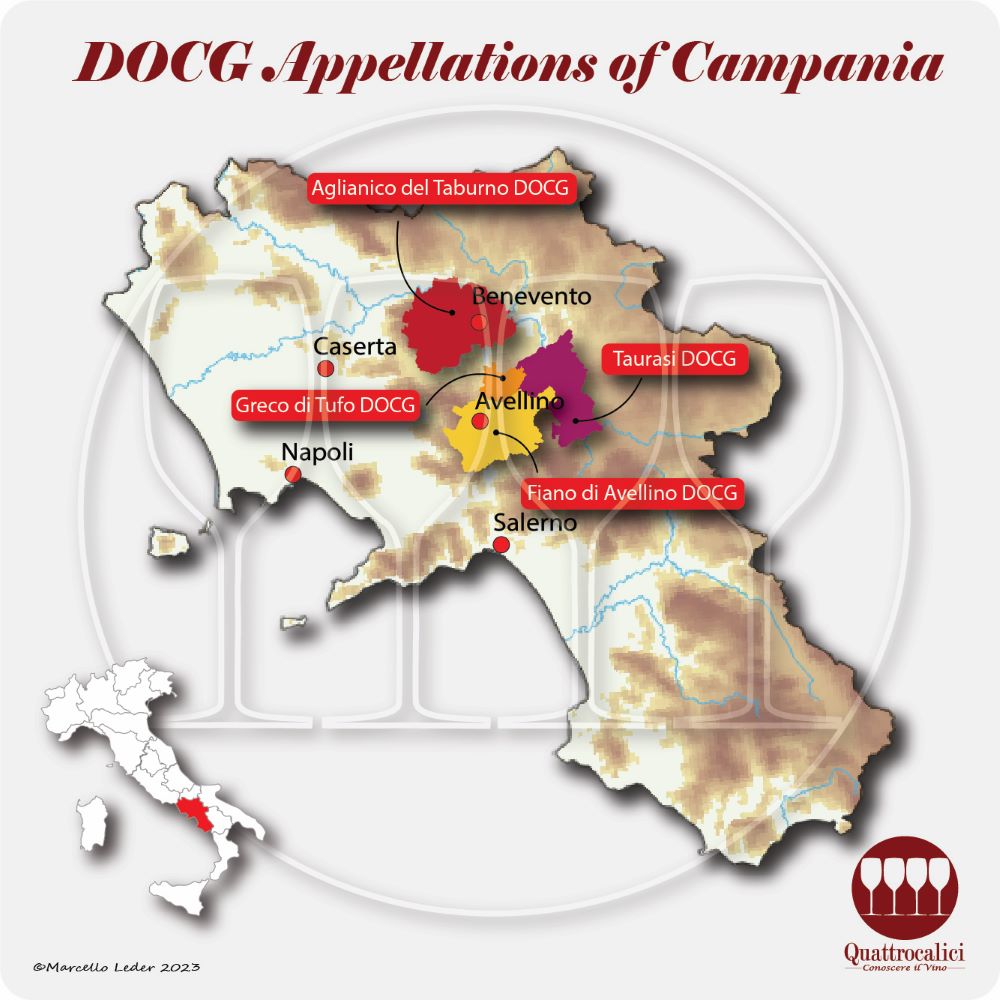


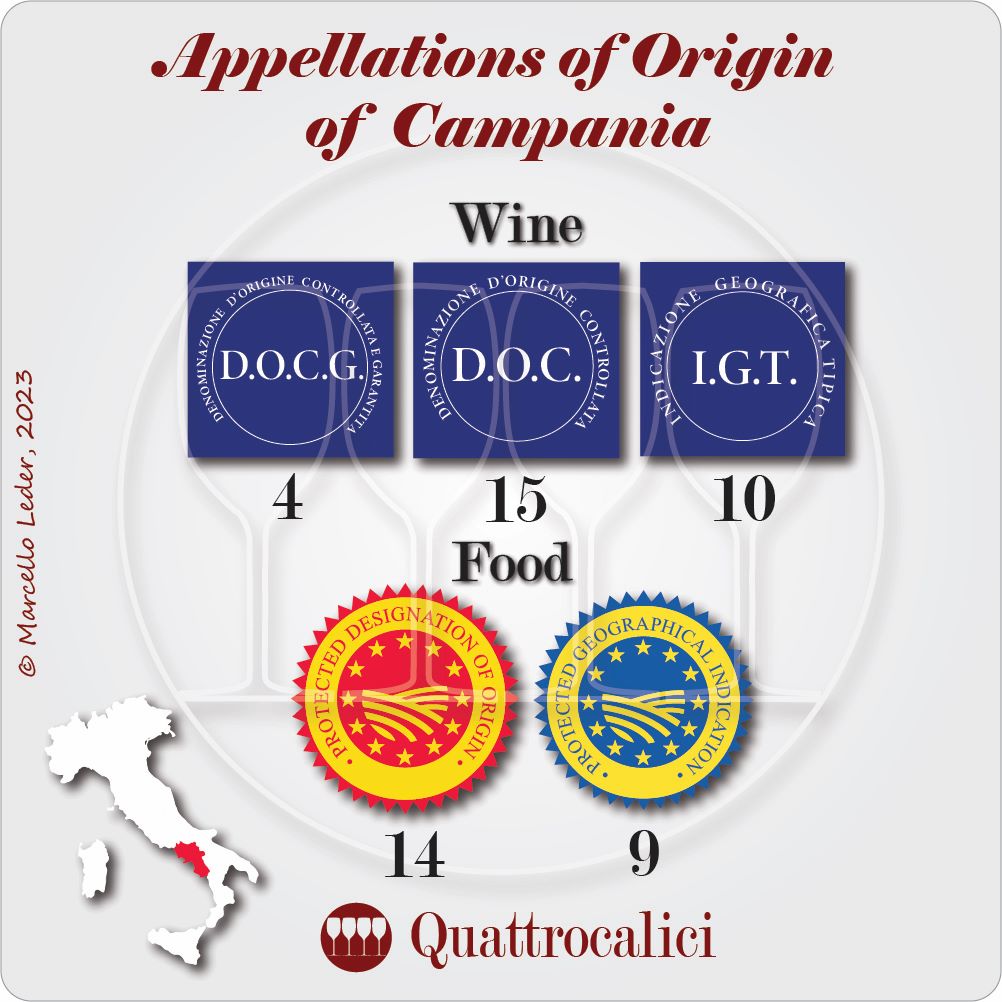
In Campania, wine is a product of primary importance, and the region now boasts 15 DOC and 4 DOCG designations (for a total of 19 PDOs), in addition to 10 PGI dedicated to wine. The DOCG (Denominazione di Origine Controllata e Garantita) designations for wine in Campania are Taurasi, Greco di Tufo, Fiano di Avellino, and Aglianico del Taburno. The DOC (Denominazione di Origine Controllata) designations for wine in Campania include Ischia, Capri, Vesuvio, Cilento, Falerno del Massico, Castel San Lorenzo, Aversa, Penisola Sorrentina, Campi Flegrei, Costa d’Amalfi, Galluccio, Sannio, Irpinia, Casavecchia di Pontelatone, and Falanghina del Sannio. Lastly, the IGT (Indicazione Geografica Tipica) designations for wine in Campania are Colli di Salerno, Dugenta, Epomeo, Paestum, Pompeiano, Roccamonfina, Beneventano, Terre del Volturno, Campania, and Catalanesca del Monte Somma.
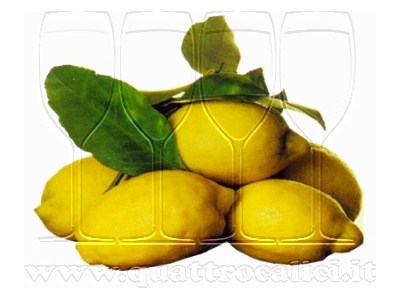
In the Agro Beneventano area, the DOC Falanghina del Sannio and DOCG Aglianico del Taburno wines are produced. Aglianico, along with other local grape varieties such as Greco, Fiano, Piedirosso, and many others, gives life to the DOC Sannio, with its vast heritage of different wine types. In Irpinia, some of Campania’s most prestigious wines are produced, such as those from the DOCG Taurasi, based on Aglianico, the DOCG Fiano di Avellino, from the homonymous grape variety, and the DOCG Greco di Tufo, from the white Greco grape variety. The fallback designation Irpinia DOC includes various styles, among which are red wines based on Aglianico, Sciascinoso, and Piedirosso, while among the white wines, in addition to the already mentioned Greco and Fiano varieties, Coda di Volpe and Falanghina are also included. The province of Caserta features the DOCs Falerno del Massico, Asprinio di Aversa, Galluccio, and Casavecchia di Pontelatone. The Asprinio vineyards star in an original and ancient training system, where they are married to poplar trees in traditional “alberate” that extend vertically up to heights exceeding three meters. Further south, in the volcanic lands of the Vesuvian and Neapolitan area, the vine rows grow Piedirosso, Falanghina, Biancolella, Sciascinoso, Forastera, and many others. From these, the DOC Vesuvio and Lacryma Christi del Vesuvio wines are produced, as well as the Falanghina from the DOCs Campi Flegrei, Ischia, and Capri. Moving further south, we reach the Sorrento Peninsula. Here, where the yellow of lemons blends with the blue of the sea, is located the DOC Penisola Sorrentina with its subzones Lettere, Gragnano, and Sorrento. In the nearby Amalfi Coast, local wines derive from rare native grape varieties such as Fenile, Ginestra, Ripolo, Pepella, and Tintore, which give their wines their characteristic aromatic complexity. They fall under the DOC Costa d’Amalfi, with its subzones Furore, Ravello, and Tramonti. In Cilento, south of Salerno, home to the namesake national park, wines from the DOCs Cilento and Castel San Lorenzo are produced.