

The Best Tool to Learn about Italian Wine

Italy's Native Wine Grapes Guide

Catalanesca

Grape's Data Sheet

The Catalanesca Wine Grape in Italy

Catalanesca - The Grape and the Wines

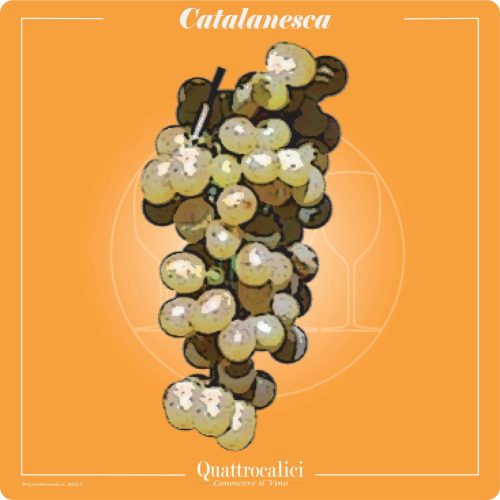
The Catalanesca grape was first imported to Campania in 1450 from Catalonia by Alfonso I of Aragon, monarch of the Kingdom of the Two Sicilies, and it was planted on the slopes of Monte Somma, between Somma Vesuviana and Terzigno. The Catalanesca grape had a certain spread until the beginning of the century, but little of it survived the post-phylloxera era, and today it survives only in small plots. It can be found mainly in the municipalities of San Sebastiano, Massa di Somma, Pollena Trocchia, Somma Vesuviana, Sant’Anastasia, and Ottaviano. Catalanesca is characterized by its loose cluster, round berries, and golden, thick, and crunchy skin. At the time it was classified as a table grape, its vinification was not allowed, although local winemakers, knowing its qualities, have always been used to turning it into wine.

The process to elevate Catalanesca to the rank of wine grape began in the 1990s, but only in 2006 was its vinification officially authorized, and since 2011, the wine can be marketed under the denomination Catalanesca del Monte Somma IGT. Catalanesca is a late-ripening grape, harvested between October and November, with an old tradition of leaving the clusters on the vines until the Christmas period, gradually removing the spoiled berries. The soils characterizing the Monte Somma area are of volcanic origin and extremely rich in minerals, a feature that gives the grape a very unique connotation. The dry white variety is a straw-yellow wine with golden reflections, typical of the grape. The intense aromas of apricot and broom are complemented by a marked minerality, both on the nose and palate. Catalanesca wine requires a proper period of bottle aging to express its best qualities.

catalanesca a native wine grape of Italy

Catalanesca - General Info Table

Catalanesca is one of the  Native Grapes with White berry widespread mainly in Campania, officially listed in the “Catalogo nazionale varietà di vite” since 2007. Its surface under vines in Italy is 54 ha.
Berry colorWhite berry
Grape CategoryNative Grapes
Main RegionCampania
Surface under Vines in Italy54 ha
Year of listing2007

Catalanesca - Ampelographic Data

Each grape variety is characterized by Ampelographic Descriptors that define the appearance of its main elements. The ampelographic features of the Catalanesca grape variety are:
Leaf Features
The leaf of the Catalanesca grape variety is .
Bunch Features
The bunch of the Catalanesca grape variety is sparse, medium-sized, cylindrical.
Berry Features
The berries of the Catalanesca grape variety are medium-sized, of egg-d and yellow-greenish colored skin.

Catalanesca - Wine Features

The Varietal Wine obtained from each and every Grape Variety, features precisely defined organoleptic characteristics. Referred to Catalanesca grapes, they are as follows:
Varietal Wine's features
The wine obtained from Catalanesca grapes is straw yellow. On the palate the wine is fruity, mineral.

Catalanesca - Agricultural & Productive Features

Each and every grape variety features very specific agricultural and productive characteristics, such as productivity, yield, ripening time, the ideal type of climate or pruning system, sensitivity to adversities, varying degrees of disease resistance and many others. For the Catalanesca grape variety, the main characteristics are:

Catalanesca - Appellations of Origin

The Quattrocalici Grape Varieties Database collects data on all grape varieties that are explicitly mentioned in at least one Italian PDO (Protected Designation of Origin) or PGI (Protected Geographical Indication) denomination. The Catalanesca grape variety is mentioned in the regulations of the following denominations:
DenominationTypeRegion
Catalanesca del Monte Somma IGTIGTCampania