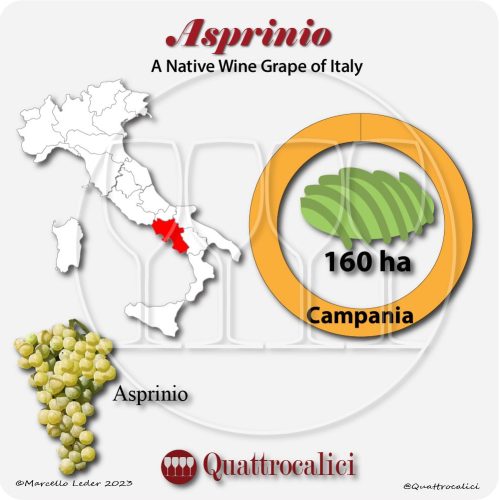


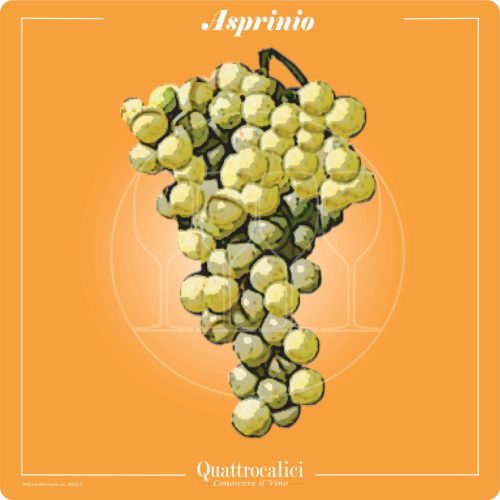
The Asprinio grape, also known as Ragusano, is widespread in Campania, especially in the Caserta and Naples areas. Its ancient origins identify it as indigenous to this area: it seems to derive from ancient wild vines domesticated by the Etruscans, and the ancient cultivation system, known as “alberata,” with vines trained on elms or poplars, also seems to originate from those ancient times. Its characteristic of being cultivated mainly in sandy soils has partly protected it from the phylloxera, and often even today, Asprinio vines are grown on their own roots. Its pronounced acidity makes it suitable for sparkling wine production. This grape variety is the basis for the production of Asprinio di Aversa DOC wine.
Asprinio is an ancient grape variety, just like the vine cultivation method in these lands, the Etruscan-origin alberata aversana. In fact, the ancient Greeks used to cultivate vines in a low bush form, while the Etruscans took advantage of the climbing nature of the Vitis vinifera by supporting it on trees, which thus acted as natural supports. Even today, in the countryside of Aversa, some of these vineyards can be admired, “married” to poplars that reach up to 15/20 meters high. These vineyards preserve the centuries-old memory of vine cultivation by Etruscan populations, sometimes still on their own roots, forming rows with high green barriers full of clusters. The harvest is carried out with long ladders leaned against the trees, a job that requires great skill and balance.