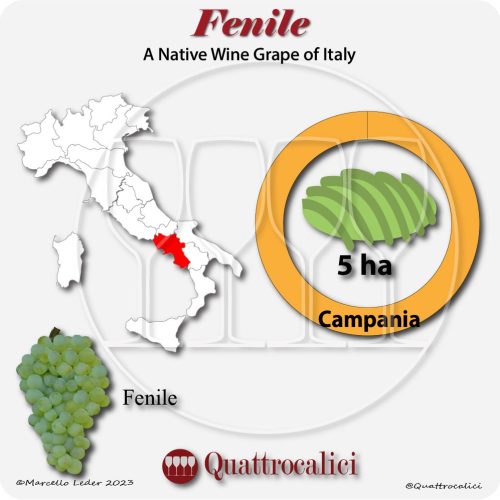



The Fenile grape is a native white grape variety from Campania. It is particularly associated with the Amalfi Coast. This grape, rare and little known outside its area of origin, is an important component of local wines, giving them a distinctive and unique character.
Ampelographically, Fenile presents medium-sized, generally pentagonal leaves with shallowly lobed margins. The clusters are compact, conical-pyramidal in shape, often with one or two wings. The berries are medium-small, spherical, and intense golden yellow in color. The skin of the berries is thin but resistant, a characteristic that protects the grapes from the climatic adversities typical of coastal areas. The pulp is juicy with a sweet and aromatic flavor, a peculiarity reflected in the wine produced.
Fenile is mainly cultivated in the Amalfi Coast area, particularly on the steep terraces that characterize the landscape of this region. The vineyards are located on calcareous-clay soils, well-drained and rich in minerals, influenced by the Mediterranean microclimate that combines mild temperatures, abundant sunshine, and sea breezes. These favorable pedoclimatic conditions contribute to the optimal ripening of the grapes, enhancing their aromatic and taste characteristics.
The wine obtained from the Fenile grape has a bright golden yellow color, reflecting the ripeness of the grapes at harvest. On the nose, it offers an intense and complex aromatic bouquet, with predominant notes of tropical fruit such as pineapple and mango, accompanied by hints of citrus and floral nuances of broom and chamomile. On the palate, the wine is rich and enveloping, with a good structure and a marked acidity that balances the natural sweetness of the fruit. The finish is long and persistent, with a mineral aftertaste that adds depth and character.
From an enological perspective, Fenile is often vinified in purity to enhance its distinctive characteristics, but it can also be blended with other native varieties such as Ginestra and Ripoli, contributing to the production of complex and harmonious white wines, such as those of the Costa d’Amalfi DOC denomination. The winemaking technique usually involves fermentation at a controlled temperature in stainless steel, with occasional aging in wood to add complexity and structure without overwhelming the grape’s aromatic profile.