


The Pepella grape is cultivated exclusively on the Amalfi Coast, primarily in the municipalities of Tramonti, Ravello, and Scala. The first mention of this variety dates back to 1877 by Di Rovasenda in his “Saggio di ampelografia universale,” where he references a table grape from the Naples province called Pepe. It is likely that the introduction of Pepella to the Amalfi Coast occurred relatively recently, probably not before the late 19th century. The name “Pepella” comes from the phenomenon of acinellatura, which causes the grapes to vary in size, with some berries being normal-sized and others as small as a peppercorn. The loose bunches and thick skins protect Pepella from Botrytis, but it is sensitive to other diseases and offers low yields, factors that have led many producers to abandon its cultivation over the years.
Today, Pepella is nearly extinct, and the few remaining vines are very old, typically found in ancient vineyards where it is often planted alongside other local varieties such as Biancatenera, Biancazita, and Ripolo, which together form the blend for Costa d’Amalfi Bianco DOC in the subzones of Tramonti and Ravello, in the Salerno province.
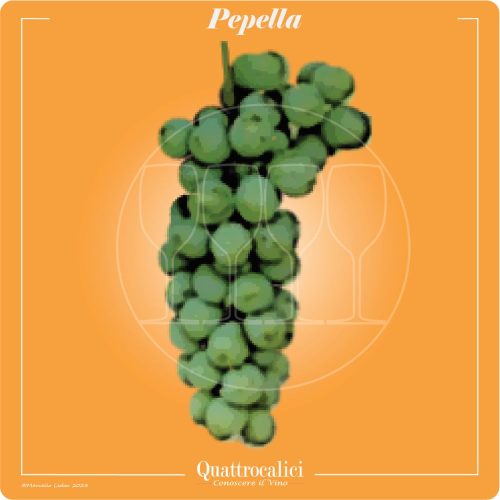
From an ampelographic perspective, Pepella has medium-sized, pentagonal, pentalobate leaves. Its bunch is medium in length, conical-pyramidal, winged, and loosely packed. The berries are small or very small, uneven in size, elliptical in shape, with green-yellow skin, lightly covered with pruina, and a visible navel.
