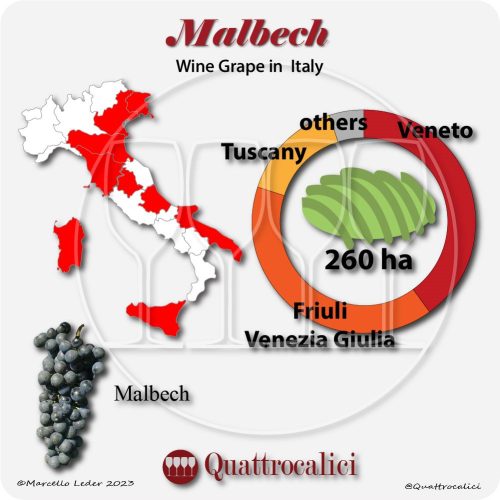


The Malbech grape variety is of French origin, widely grown in the Bordeaux region. In its homeland, the southwest of France, it is also known as Cot or Côt. It seems that its name derives from the name of the owner who first planted it in Medoc. It was also widely cultivated in Italy until recently; however, the increasing interest in Cabernet and Merlot has significantly reduced its planted area. Malbech appears to have arrived in Italy around the mid-1800s, but it was only in 1881 that Count Provana di Collegno (Turin) showcased Malbech at the ampelographic exhibition in Pinerolo. Today, Malbech is cultivated in Veneto, Sardinia, Abruzzo, Friuli-Venezia Giulia, Tuscany, Sicily, Puglia, and Umbria, but it finds its best expression in the Venetian and Friulian provinces of Treviso, Udine, and Pordenone, where it is also vinified in purity. Between Veneto and Friuli, it is used in the production regulations of the Lison Pramaggiore DOC wines. Very often, Malbech is confused with particular clonal selections of Merlot.
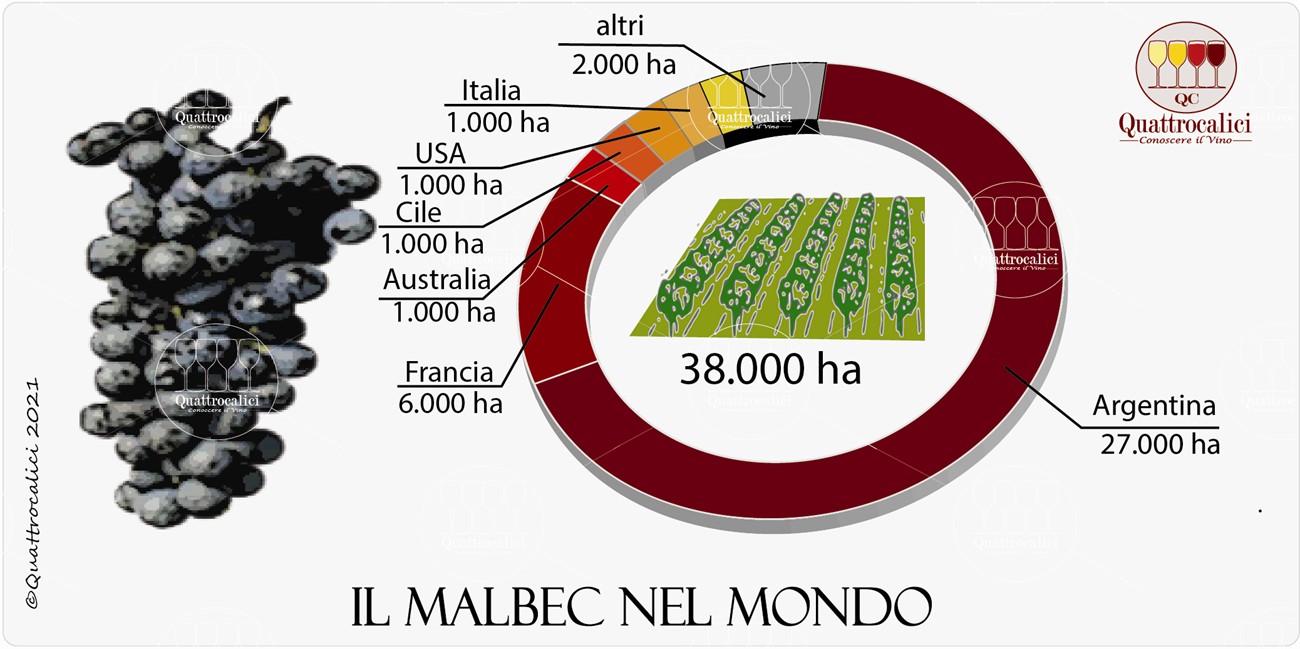
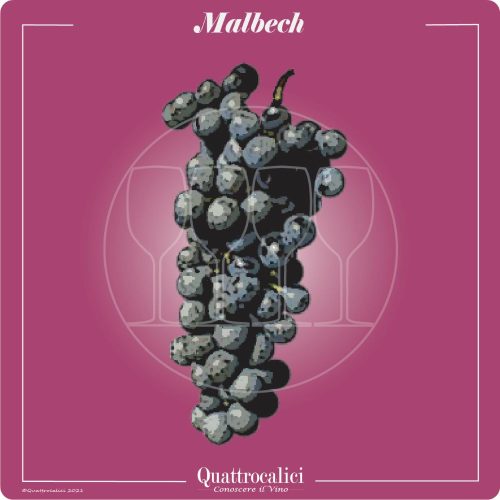
Malbech, slowly abandoned in France, has found its adopted home in Argentina, where it is now the most widely cultivated red grape variety in that country, known as Malbec. Malbech has large, pyramidal clusters and large berries with an intense bluish-violet color and rich in bloom. Malbech prefers dry and arid climates and compact clay and limestone soils. In humid climates subject to frost, Malbech becomes sensitive to attacks of powdery mildew and downy mildew. It is characterized by the phenomenon of acinellatura, a lack of pollination of the berries and the cessation of their development. In such cases, the clusters present significantly reduced green berries without seeds. Planted in an ideal microclimate, Malbech shows good vigor and decent, consistent productivity.
Wines made from pure Malbech grapes have fresh forest aromas, with notes of blackberries, cherries, and fresh plums, clear vegetal hints of earth, gentian, undergrowth, fern, bark, and dandelion, and more delicate mineral notes of graphite. When aged in wood, they also show spicy and toasted hints of cinnamon and peat. On the palate, they are round and persistent wines, with herbaceous and fruity notes. Malbech is a very versatile wine, easy to drink, quite soft and graceful in structure and aromas, suitable for pairing with appetizers and dishes based on white and red meats.