


Emilia’s Wine Appellations
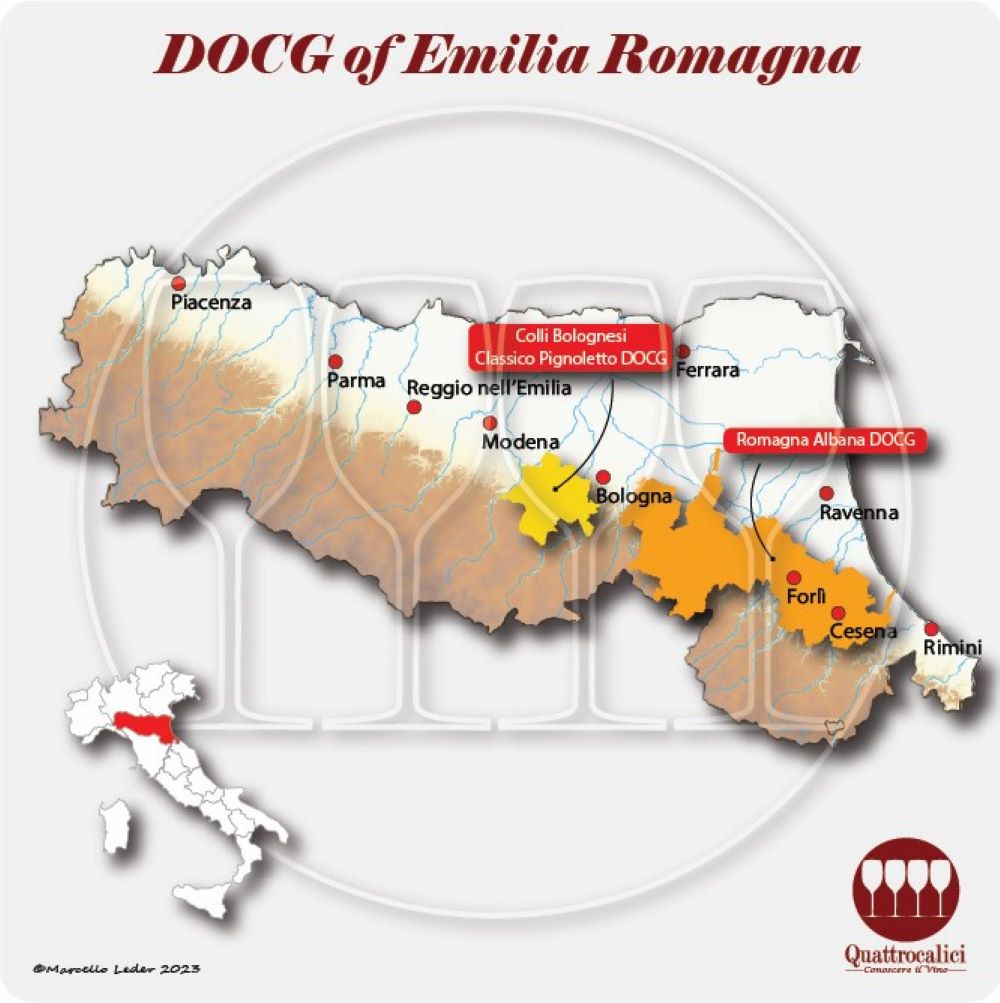
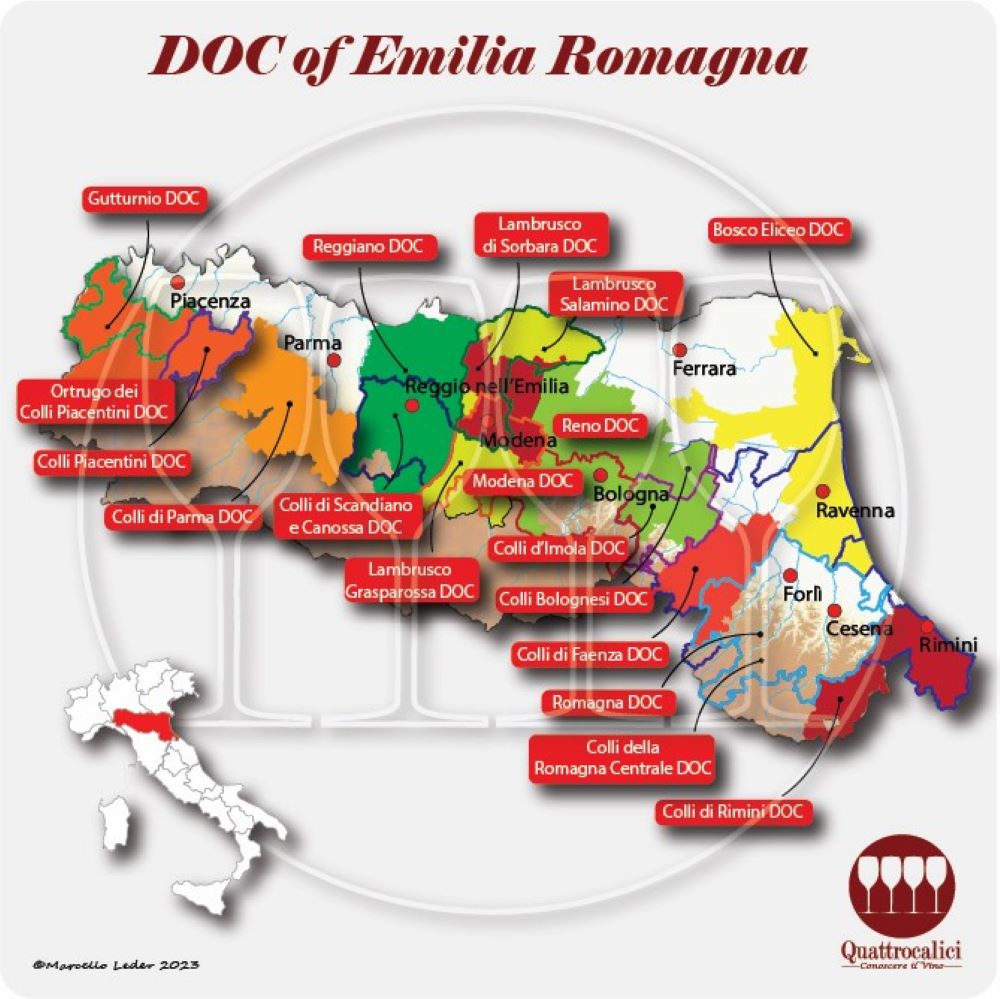
In Emilia, the viticultural landscape is marked by a rich diversity of wine denominations, underscored by a single DOCG: the Colli Bolognesi Classico Pignoletto DOCG. This area showcases the region’s capability to produce wines of exceptional quality. The Piacenza area is known for its Gutturnio DOC, characterized by Barbera and Croatina, and to some extent Bonarda, highlighting the unique varietal composition of the region. Parma’s focus on white wines over reds, under the Colli di Parma DOC, adds to the diverse oenological spectrum of Emilia.
The regions of Reggio-Emilia and Modena are celebrated for their cultivation of Lambrusco, producing distinctive wines under the Lambrusco di Sorbara DOC, Lambrusco Grasparossa di Castelvetro DOC, and Lambrusco Salamino di Santa Croce DOC. These wines exemplify the vibrant and fruity character that Lambrusco is known for. In the Bologna area, Montù and Pignoletto, both white grape varieties, are prevalent under the Reno DOC denomination, further enriching Emilia’s viticultural identity. Additional designations like the Colli d’Imola DOC in the province of Bologna, Colli di Scandiano e Canossa DOC and Reggiano DOC in Reggio Emilia, along with Colli Piacentini DOC and Ortrugo dei Colli Piacentini DOC in Piacenza, showcase the variety of grapes and wine styles present in Emilia. The Fortana grape, also known as Uva d’Oro in the Ferrara area, is highlighted by the Bosco Eliceo DOC, marking the rich, dark-skinned varieties of the region. The Colli di Faenza DOC, straddling the border with Romagna, extends into the provinces of Ravenna and Forlì-Cesena, blending the viticultural traditions of both regions.
Romagna’s Wine Appellations
Transitioning to Romagna, the region boasts its own DOCG, the Romagna Albana DOCG, alongside important DOCs such as Romagna DOC and Colli della Romagna Centrale DOC. Sangiovese stands out as the most significant grape variety, overshadowing the widespread Trebbiano Romagnolo, Pagadebit, and Albana, the latter giving rise to the already mentioned Romagna Albana DOCG, particularly noted in the Faenza area. The viticultural zones around Faenza, the hilly region of Forlì, and the hills surrounding Cesena and Rimini (Colli di Rimini DOC), represent the cornerstone of Romagna’s wine production. This diversity not only illustrates the rich viticultural heritage of both Emilia and Romagna but also showcases the varied terroir and microclimates that contribute to the unique characteristics of each wine produced in these regions.