

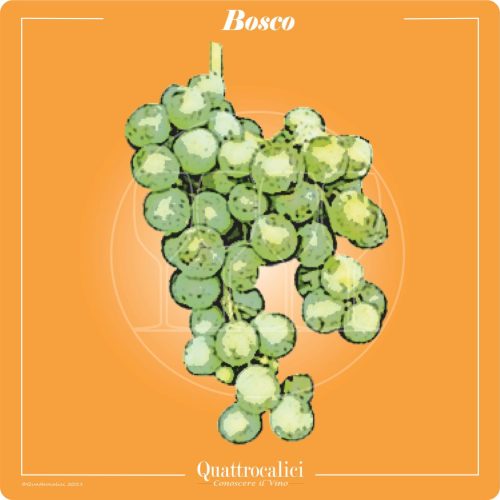
The Bosco grape is cultivated in Liguria, in the area of Genoa and the Cinque Terre. Its origins are as ancient as they are uncertain. The most accredited hypothesis is that it is indigenous to the Cinque Terre, and that its name recalls the wooded hills that characterize the area. Another hypothesis is that its origin is Genoese, and that the name Bosco derives from the forest located in the park of the Villa dei Marchesi Durazzo in Genoa. The Bosco grape contributes to the blend for the production of the famous passito “Cinque Terre Sciacchetrà.” Bosco is one of the most important grape varieties in Ligurian viticulture. The grape is also known by other names such as Bosco Bianco del Genovese, Madea, and Bosco Bianco di Savona, but its distribution does not seem to extend beyond the regional borders of Liguria.
In the Cinque Terre, the terraced land reclaimed from the mountains is ideally suited to host the Bosco grape, which adapts well to hilly terrains and is productive even in less favorable exposure conditions. The coastal ventilation helps keep these portions of land dry, making them ideal for viticulture, although it is considered “heroic” due to the difficulties in accessing the land and transporting the grapes during harvest. One of the curiosities about Bosco as a grape variety is that it does not seem to be vinified as a pure variety. In fact, its vinification traditionally occurs in a blend with other local grapes (Albarola, Bianchetta, and Vermentino), and it appears that the organoleptic characteristics of wine made from the Bosco grape alone are practically unknown.
