

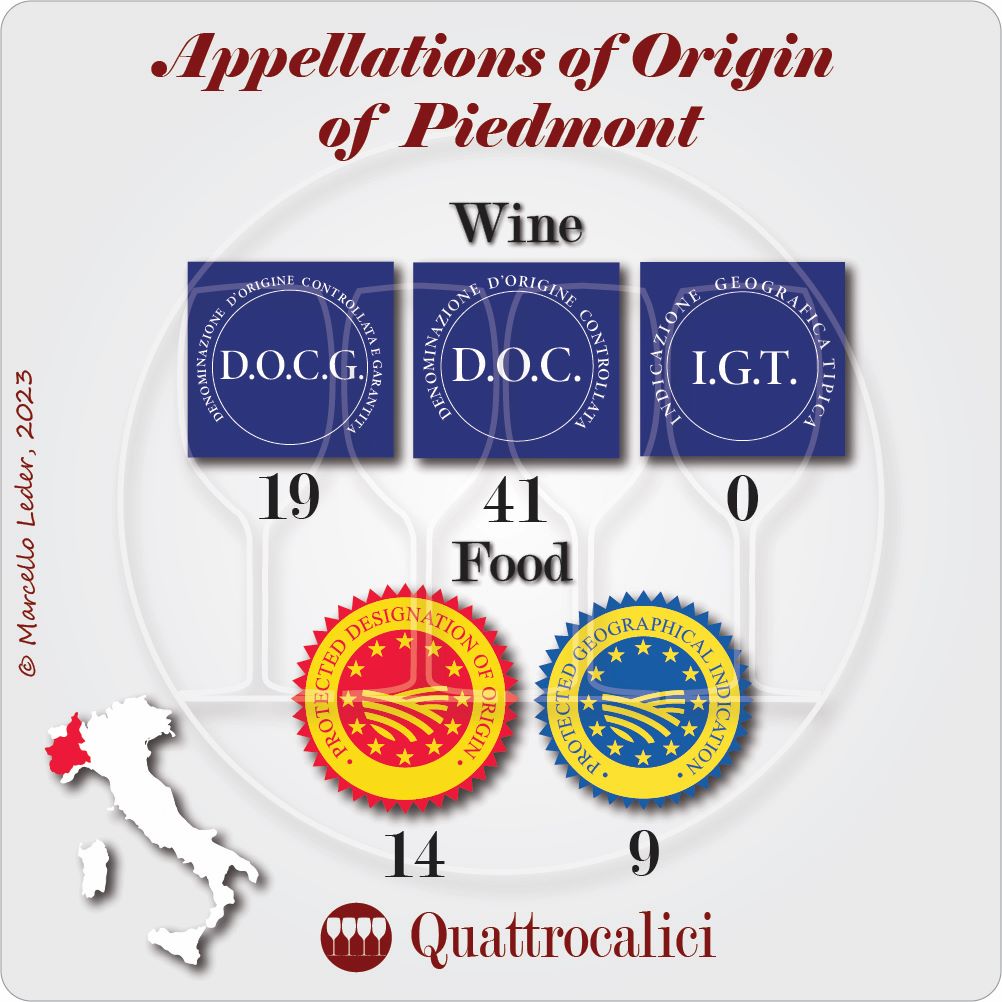
Piedmont stands out as one of the most emblematic regions of the Italian wine industry, marking itself for an impressive pursuit of quality that, in recent years, has achieved remarkable results, elevating the sector to levels of excellence both in the wine scene and in the culinary landscape. A distinctive aspect of Piedmont is the absence of IGT (Typical Geographical Indication) wines, opting instead for a system based exclusively on DOC (Controlled Designation of Origin) and DOCG (Controlled and Guaranteed Designation of Origin) designations. These are governed by stricter regulations and subjected to more meticulous controls, thus ensuring a superior quality product.
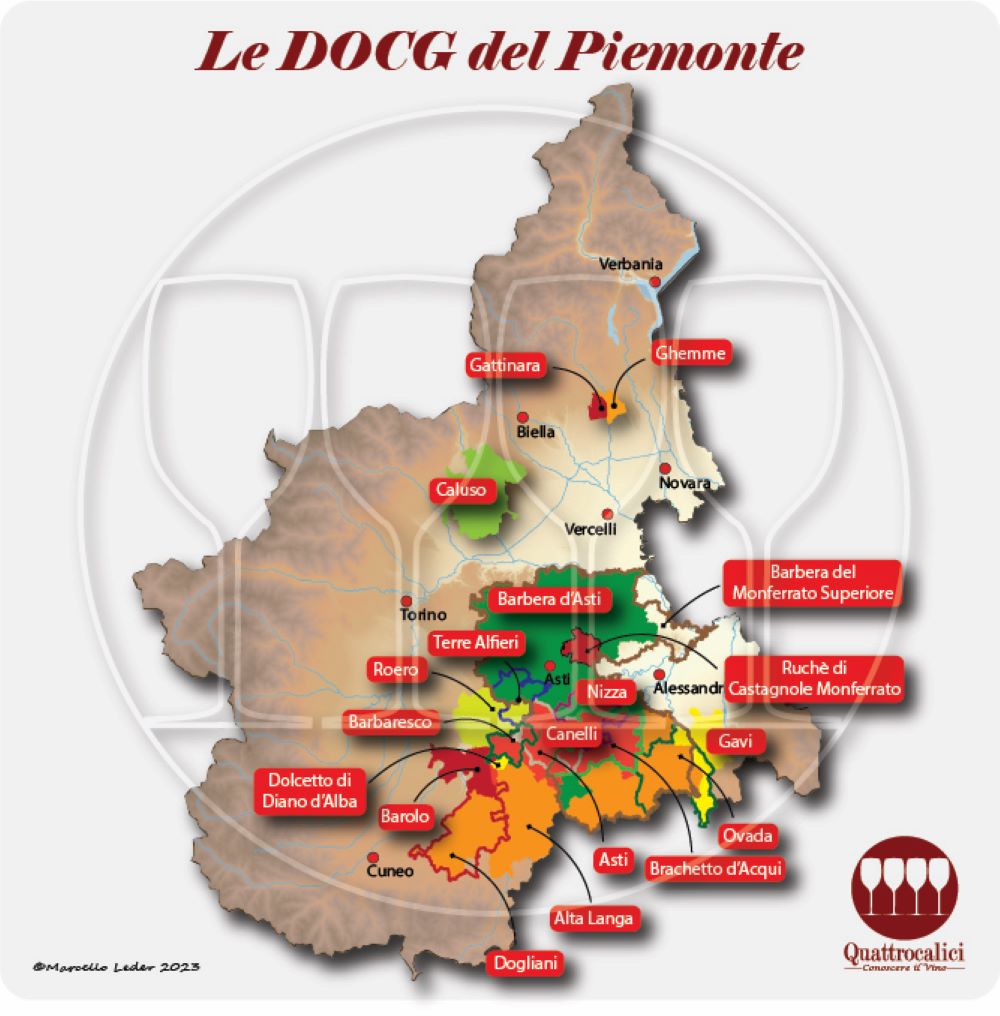
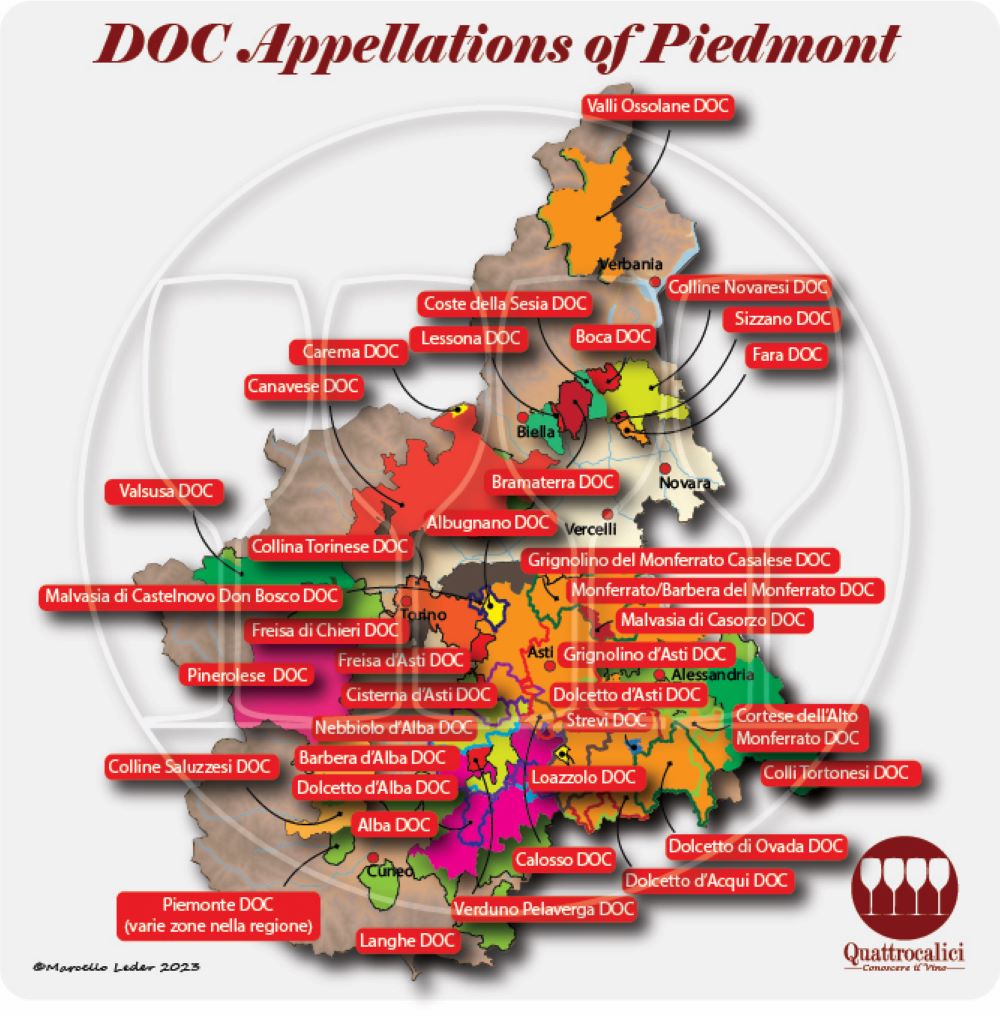
The wine designations of origin in Piedmont are divided into eight main areas, each with unique territorial characteristics that directly translate into the variety and quality of the wines produced. These areas include:
1. Northern Piedmont, which encompasses the provinces of Novara and Vercelli, is renowned for its Gattinara DOCG and Ghemme DOCG designations, as well as Lessona DOC, Bramaterra DOC, Boca DOC, Sizzano DOC, and Fara DOC. The main grape varieties of this area include Nebbiolo, locally known as Spanna, Croatina, Barbera, and the white Erbaluce.
2. The area bordering Valle d’Aosta, where Canavese DOC and Carema DOC stand out, with a prevalence of Nebbiolo and Erbaluce grape varieties.
3. Around Turin, is the Collina Torinese DOC zone, characterized by the cultivation of Freisa, Barbera, Bonarda, and Dolcetto, in addition to Erbaluce di Caluso DOCG, specialized in white wines from the eponymous grape variety.
4. The Monferrato, a historical area between the cities of Asti, Casale Monferrato, Ovada, and Gavi, famous for designations like Barbera del Monferrato Superiore DOCG, Brachetto d’Acqui DOCG, and Dogliani DOCG. The grape varieties here include Moscato Bianco, Cortese, Grignolino, in addition to the black-berried Malvasias, Malvasia di Casorzo, and Malvasia di Schierano.
5. The Asti area, famous for producing high-quality sparkling wines based on the aromatic Moscato bianco grape, represents the most important sparkling wine area of Piedmont and one of the most renowned in Italy.
6. In the Tortonese, province of Alessandria, the native Timorasso grape is cultivated, known for producing wines of great structure and longevity, alongside Cortese and Barbera.
7. The Roero DOCG area, divided by the Tanaro river, is famous for the Nebbiolo, Barbera, and the white Arneis grape varieties, located on the left orographic bank.
8. The Langhe, situated to the right of the Tanaro river, is famous for its Barolo DOCG and Barbaresco DOCG denominations, based on Nebbiolo, in addition to Dogliani DOCG, with Dolcetto. This area also cultivates grape varieties like Ruché and Barbera, further enriching the Piedmontese wine panorama.
Through this territorial and viticultural diversity, Piedmont offers an incredibly rich range of wines, each a unique expression of its own terroir, consolidating its position as one of the most prestigious wine regions not only in Italy but in the world.