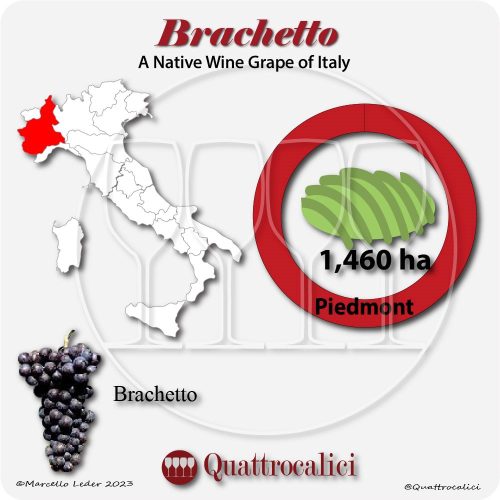


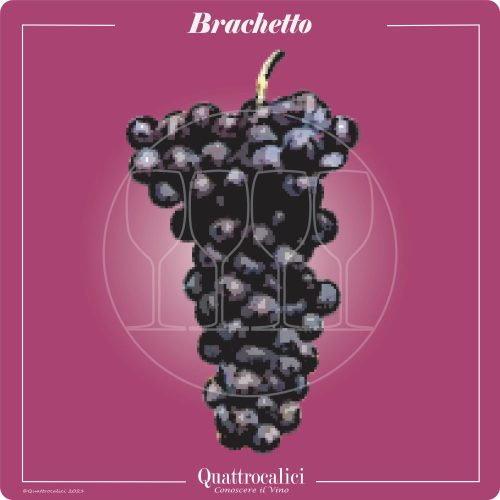
The Brachetto grape has been cultivated in the Acqui Terme area of Piedmont since ancient times. After the advent of phylloxera and a decline in interest in sweet sparkling wines, the interest in this grape waned, only to be revived in recent decades, culminating in 1996 with the recognition of the DOCG. From an ampelographic point of view, identifying Brachetto has not been easy: in Piedmont, there are many varieties that share the characteristics of berry color (black) and aromaticity, and others that are similar but not aromatic. The “Moscato nero” of Roero, known as “Brachettone,” and the non-aromatic “Brachèt” of Canavese are two examples of local species that are not authorized and, as such, do not represent synonyms of Brachetto.
When talking about Brachetto, the most important denomination is Brachetto d’Acqui DOCG. Brachetto produces wines that are lightly structured and low in tannins, with a barely perceptible pseudo-caloric sensation. The Brachetto grape is highly aromatic. Its wine is a lively and fresh ruby red, known and appreciated for its aromaticity with hints of rose and strawberries. Red and black raspberries, wild strawberries, and rose petals are the terms most frequently used to describe its deep aroma. Brachetto wine should be consumed young and is typically served slightly chilled, often with fresh fruit. It is well-known for its suitability for sparkling wine production using the Charmat method.