

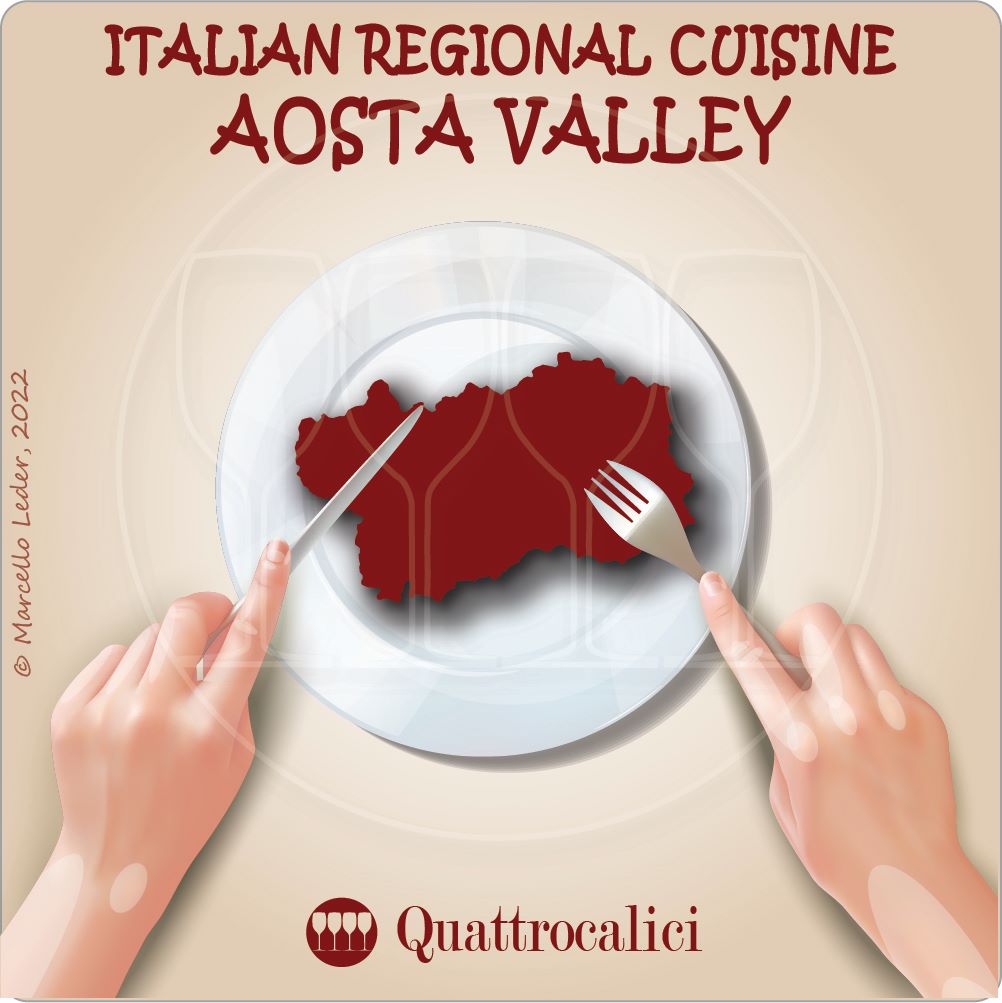
Valle d’Aosta’s cuisine is rustic and simple, deeply rooted in mountain traditions, and largely based on a few local ingredients. Game, cured meats, and cheeses play a crucial role in this mountain cuisine. Among the cured meats, Lard d’Arnad and Jambon de Bosses stand out, which can be paired with a Vien de Nus and Prämetta wine, respectively. The region’s most famous cheeses are Fontina (at various stages of aging) and Toma. Unique to Valdostan regional cuisine is the almost total absence of wheat and thus pasta, replaced by potato-based dishes such as gnocchi and polenta (made from corn, rye, and buckwheat), as well as rice. Another element scarcely used in traditional dishes is olive oil, replaced by butter and lard. The cuisine is also influenced by French culinary traditions, particularly those from neighboring transalpine regions like Savoie, Haute-Savoie, and Valais. The domestic preparation of rye or barley bread, apple vinegar, and walnut oil, especially used in salads, is still common in Aosta Velley’s homes.
First Courses in Valle d’Aosta’s Regional Cuisine
Among the first courses are Chnéfflenes, small batter dumplings cooked in boiling water and served with fondue, cream and speck, or braised onion, and Chnolles, small cornmeal dumplings, both typical Walser dishes from the upper Lys Valley (Gressoney-Saint-Jean), to be eaten in a pork broth. Pèilà is a soup made from rye and wheat flour, with bread, Fontina cheese, and butter. Seupa à la Vapelenentse is one of the most famous Valdostan dishes, made with bread, cabbage, and Fontina cheese, and is best paired with a Valle Centrale Chardonnay. Seuppa à la Cognèntse, from Cogne, is similar but includes rice. Seuppa de l’âno (donkey soup), also called seuppa frèide (“cold soup”), is made with sliced black bread and sweetened red wine; Soça is a bean soup with onion and spices, potatoes, smoked lard, and browned saouceusses, perfect with a Chambave rouge wine. Sorsa is a thick soup prepared with broth, black bread, potatoes, beans, green beans, carrots, pears, and apples.
Second Courses in Valle d’Aosta’s Regional Cuisine
Noteworthy second courses include Bouilli à la saumure, a boiled salted meat dish available from Valdostan butchers in autumn and winter, with sausages and potatoes, ideally paired with an Arnad-Montjovet Nebbiolo; Carbonade, an ancient beef dish cooked slowly with garlic and lard, in a white or red wine sauce with spices, which pairs well with an Enfer d’Arvier red wine; Cotoletta di vitello alla valdostana, veal cutlet with Fontina cheese and eggs, fried in butter, best with a Fumin wine; Fricandeau, veal pieces with onion, rosemary, aromatic herbs, and white wine, served with polenta and complemented by a Torrette Petit rouge red wine; and Involtini di Fénis, veal rolls stuffed with Motsetta (a cured meat similar to bresaola) and Fontina, paired with a Donnas Nebbiolo wine. Lastly, various melted cheese dishes, such as the well-known fondue, can be paired with either a medium-bodied red wine like a Valle Centrale Pinot Noir or a robust white wine like a Nus Malvoisie.
Desserts in Valle d’Aosta’s Regional Cuisine
As desserts, there’s Creinchein, a buttery sweet dessert; Tegole valdostane, almond paste wafers; Torcetti, sweet butter dough biscuits with sugar or honey, typical of Saint-Vincent; Mécoulin, a sweet bread typical of Cogne and Hône; and Crema di Cogne, made with cream, sugar, and chocolate. The quintessential sweet wines of Valle d’Aosta are the Chambave Muscat Flétri and the Nus Malvoisie Flétri, both passito wines, and they find their ideal pairing with Valdostan desserts.