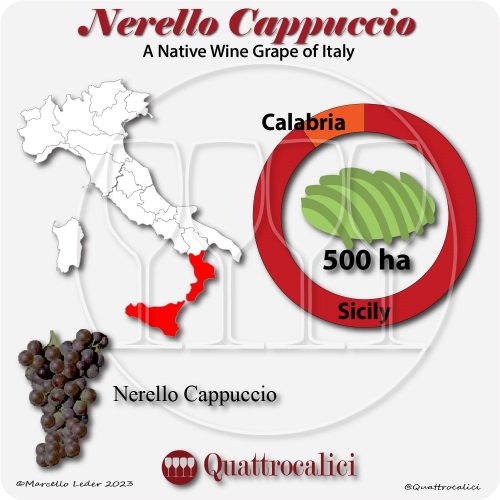


The Nerello Cappuccio grape is one of two Nerello varieties, both of which are found in Sicily and Calabria. It is primarily cultivated in the coastal, hilly, and foothill areas of the provinces of Catania and Messina. In Calabria, it is found in the wine regions of Reggio Calabria and Catanzaro. In Sicily, Nerello Cappuccio is most prevalent in the Etna region, growing on the slopes of Mount Etna between 350 and 900 meters above sea level. It contributes about 20% to the blend of Etna Rosso DOC wines. The name “Nerello” likely comes from the intense color of the grapes, while “Cappuccio” refers to the plant’s characteristic bush-like structure when grown in the traditional alberello style. Over time, the cultivation of Nerello Cappuccio has decreased, and for a period, there were concerns about its potential extinction.
Like Nerello Mascalese, which also contributes to the production of Etna Rosso DOC, Nerello Cappuccio is harvested late, typically around mid-October.
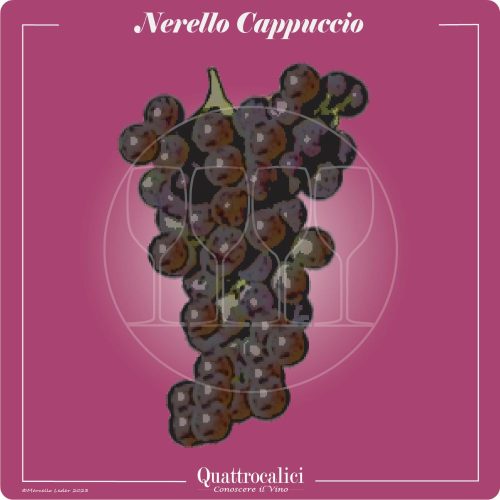
Ampelographically, Nerello Cappuccio has medium-sized leaves and small, compact grape clusters that resemble a pine cone in shape. The berries are small, with a regular shape, blue-black color, and thick skin covered in pruina (a natural waxy coating). The pulp is juicy, moderately sweet, with a slight acidity. Nerello Cappuccio is known for its good vigor and resilience to adverse weather conditions and parasitic infections that might otherwise threaten the health of the vines.
The wine made from Nerello Cappuccio is a deep ruby red with violet hues. Its aroma is intense and fruity, with more ethereal notes emerging with aging. On the palate, it has a full-bodied flavor, balanced tannins, and long-lasting aromatic persistence.