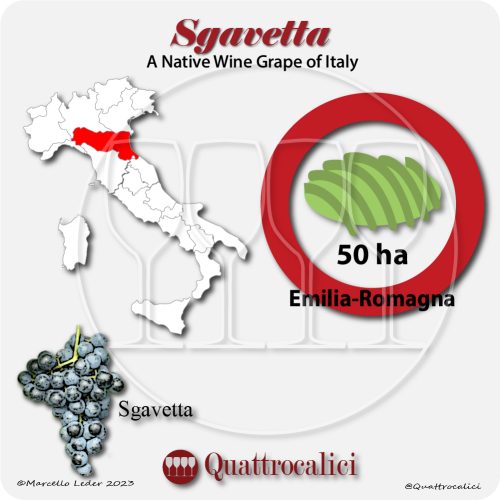


The Sgavetta grape variety is an indigenous black-skinned grape from Emilia, with the first documented cultivation in the area between Modena and Reggio Emilia dating back to the late 19th century. Over the years, the cultivation of Sgavetta has significantly declined, being replaced by other varieties, particularly those from the Lambrusco family. Known also as Sganetta, Sgavetta is still cultivated today in the Emilian-Romagnan province, where it is used as a minor component in the white blends of the DOC Colli di Scandiano e di Canossa. Sgavetta is often blended with Sauvignon Blanc. It is also one of the few varieties authorized for the production of traditional Balsamic Vinegar of Modena, alongside Lambrusco, Ancellotta, and Trebbiano grapes, which are also used in the production of other Modenese wines.
Sgavetta vines could be suitable for various terroirs in Italy, but they thrive best in northern areas with cooler temperatures and a longer growing season, which allows the berries, with their particularly thick skins, to achieve full phenolic ripeness.
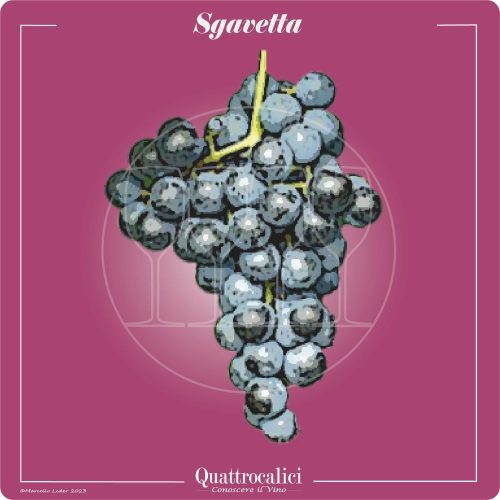
From an ampelographic perspective, Sgavetta has medium, elongated, pyramidal clusters, often winged, and quite sparse, with medium-sized, pentagonal, five-lobed leaves. The berries are medium-sized, spherical, with highly pruinose skins of bluish-black color. The Sgavetta vine has good vigor and a medium ripening period. Its yields are consistent and good.
The wine produced from Sgavetta is an intense violet color, with an intense and vinous aroma. Its taste is light, fresh, and slightly tannic.