

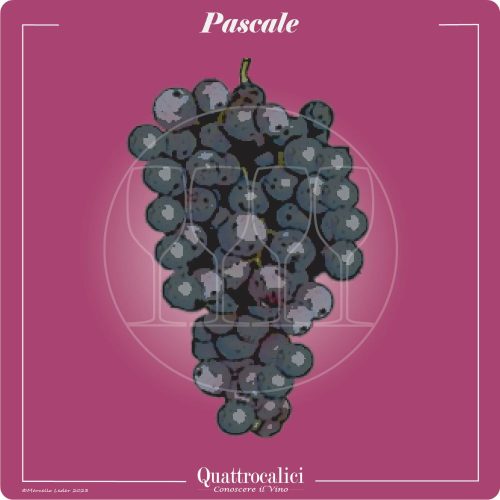
The Pascale grape variety has unknown origins, although many believe it comes from Tuscany, where it is often called “Giacomino.” This synonym is also used in Gallura, where the variety is most widely cultivated. It is commonly found in the provinces of Sassari and Nuoro, and it is often blended with Cannonau and Cagnulari grapes, rarely vinified on its own. Pascale is absent in most other provinces, except for a few hectares in the province of Cagliari. The Pascale grape has large, cylindrical clusters, often winged, with large berries and thick skins rich in bloom. The berries are a deep violet tending towards black. Pascale is moderately vigorous and known for providing consistently high yields.
The Pascale grape does not have specific soil or environmental requirements, although it prefers soils with good concentrations of clay without excessive moisture. It is used both in single-variety wines and in blends with other red grape varieties, such as in Mejlogu in the Sassari province, where it is combined with Cannonau and Cagnulari. Pascale contributes good aromatic qualities to the wine, which pairs well with roasts, but it is also commonly used as a table grape. When vinified in purity, Pascale produces wines of a beautiful ruby red color, with delicate aromas of fresh red fruit. On the palate, these wines are more robust than their nose suggests, thanks to a good tannic structure. Pascale is also included in the Campidano di Terralba DOC production regulations.
