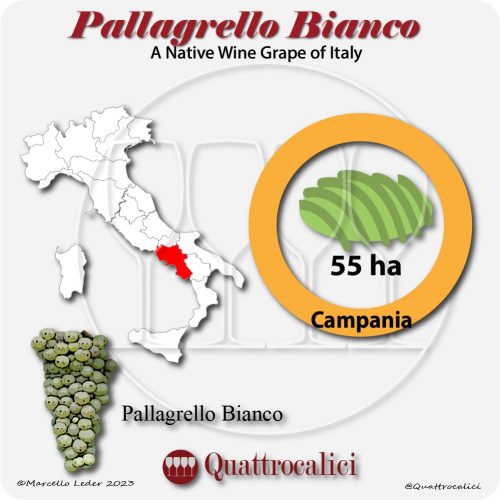


The Pallagrello Bianco grape is one of the native varieties playing a key role in the revival of Campania‘s wine scene. Originating from the Caserta area, there is also a red-berried variety of this grape. It has small clusters and perfectly spherical berries, from which it gets its name Pallagrello—meaning “small ball” in the local dialect, “U Pallarel.” Another possible origin of the name is Pagliarello, the straw rack where the grapes were traditionally laid out to dry. Its origins likely date back to the Greek colonization, with the tradition continued by the Romans, who referred to the grape as “Pilleolata.” For a long time, Pallagrello Bianco was considered synonymous with the Coda di Volpe Bianco, as both grape varieties have clusters resembling a fox’s tail in shape.
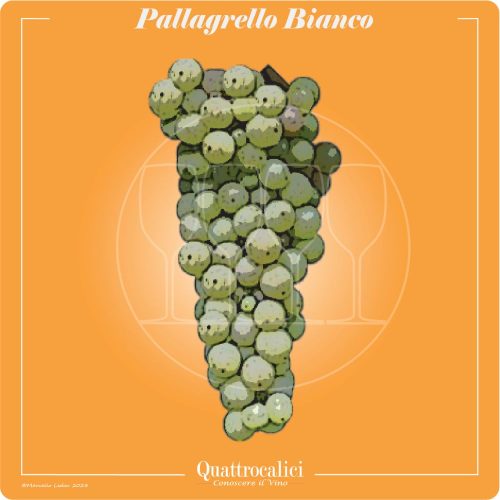
However, as early as the 19th century, some scholars realized that these were two distinct varieties. Pallagrello Bianco is a low-yielding and delicate grape, found predominantly in the Caserta province, especially in the Caiatino-Matesino wine-producing area, where it is highly recommended and yields wines with distinct typicity and growing appeal. The Pallagrello Bianco cluster is small, cylindrical, and winged, with small, round berries of yellow-green color. The grapes reach full ripeness between the second and third week of September and show good resistance to botrytis, as long as the harvest is not excessively delayed.