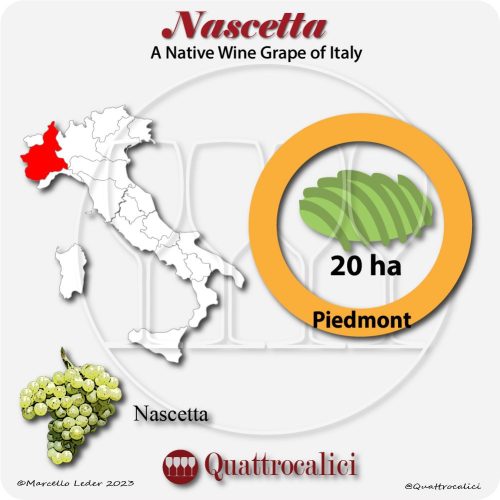


Nascetta is a native grape variety from the Alba region, grown in the Langhe hills between Barolo and Novello. It was mentioned by Rovasenda in his “Saggio di un’ampelografia universale” in 1877, where he described it as “a most delicate grape and exquisite wine.” At that time, this grape was used both for winemaking in blends and as a table grape. However, over time, the cultivation of Nascetta diminished, and today, it is grown exclusively in the municipality of Novello, albeit on a very limited scale. The grape has been known by several names over the centuries, including Nascetta, Anascetta, and Nas-cëtta. Remarkably, it survived the threat of extinction in a region dominated by Nebbiolo and its most prestigious expressions: Barolo and Barbaresco. According to recent ampelographic studies, Nascetta has some genetic similarities with Gros Blanc from the Susa Valley.
Only recently have some winemakers begun to rekindle interest in Nascetta, especially since, apart from Arneis and a few others, the Alba region lacks significant white wines, which have traditionally been less prominent in this area. In 2002, Nascetta was included in the Langhe DOC, and in 2010, the Langhe “Nas-cëtta” del Comune di Novello DOC was officially recognized, produced from pure Nascetta grapes from the Novello municipality with a yield of 90 quintals per hectare. The calcareous-clay marl soils of the Langhe provide Nascetta wines with structure, acidity, complexity, and minerality. Nascetta has excellent enological characteristics: recent analyses of the terpenes in the grapes classify Nascetta as a semi-aromatic variety, with a notable aromatic content. The wine’s aromas primarily develop during fermentation, similarly to what happens with Sauvignon. Nascetta wine displays a bright, luminous straw-yellow color. On the nose, it features notes of white flowers, citrus, and fruity aromas. On the palate, the wine is well-structured and notably fresh, enveloping, savory, with a slightly bitter finish. The good acidity and structure lend the wine excellent aging potential, making it suitable for vinification in both stainless steel and oak. It pairs well with appetizers featuring shellfish, raw fish, and vegetables, as well as first courses with fish and delicate white meat dishes or fresh cheeses.