


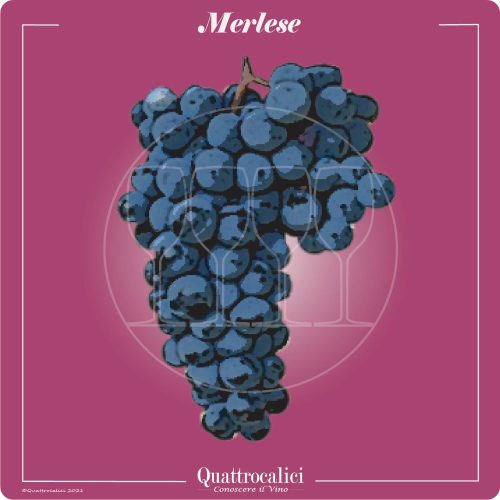
The Merlese grape variety is a hybrid of Merlot and Sangiovese, created in Emilia-Romagna in 1983, and has been protected as a copyright of the University of Bologna since its inception. It has been listed in the Variety Register of Vines since 2009. The idea behind its creation was to overcome some of the cultivation challenges posed by Sangiovese. Merlese shows good resistance to powdery mildew, downy mildew, botrytis, and sour rot. It contributes good structure to the wine, while softening the sometimes sharp taste profile of Sangiovese. The wine’s aromas are predominantly floral and fruity (blackberries, raspberries, cherries) with spicy and vegetal notes (bell pepper) as well as hints of dried fruits (almond, hazelnut). On the palate, it is dry, savory, appropriately acidic, suitably tannic, and not bitter.
Cultivation Areas
Merlese is still found in Emilia-Romagna, where the main cultivation areas are located, especially in the province of Bologna. The modest cultivated area (15 hectares in total) makes it more of an ampelographic curiosity. The calcareous and clay soils of the region, combined with abundant sunlight, promote optimal ripening of the grapes, allowing Merlese to express its full enological potential.
Ampelographic and Agronomic Characteristics
Ampelographically, Merlese features medium-sized, trilobate or pentalobate leaves of an intense green. The clusters are medium-large, compact, with a conical shape often winged. The berries are medium-sized, round, with thick blue-black skins covered by a light pruina. It ripens in September, earlier than Sangiovese, which is one of the reasons for its cross with Merlot.
Organoleptic Characteristics of the Wines
Wines obtained from Merlese are characterized by a distinctive organoleptic profile, combining the softness and elegance of Merlot with the structure and complexity of Uva di Troia. Visually, these wines display an intense ruby red color with violet reflections.
On the nose, Merlese offers a rich and complex bouquet, with notes of red and black fruits such as cherry, plum, and blackberry, accompanied by hints of sweet spices, tobacco, and chocolate. The often-present spicy and balsamic notes further enrich the aromatic profile, making these wines intriguing and sophisticated.
On the palate, Merlese wines stand out for their full structure and velvety tannins, which provide good persistence and a long finish. The acidity is well balanced, helping to maintain freshness and drinkability. These wines are well suited to aging, developing further complexity and harmony over time.
