


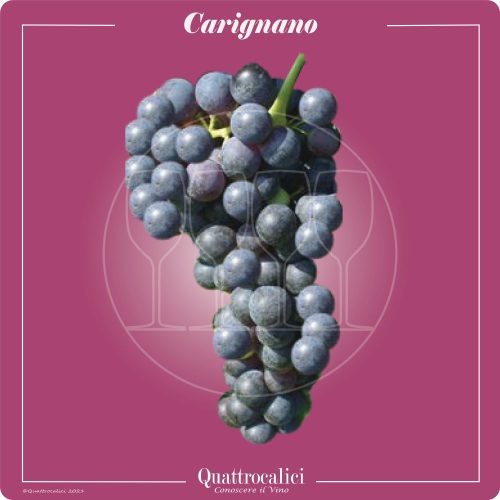
The Carignano grape is an indigenous black grape variety from Sardinia. Of probable Spanish origin, Carignano arrived in Sardinia during the Aragonese rule in the 1300s. In Spain, it is called Cariñena, and in France (where it is present in the Midi and Languedoc-Roussillon), it is known as Carignan. Its color, alcohol content, and structure make it an excellent blending wine, and the French describe it as a quantitatively fantastic grape but with little personality. These characteristics have made Carignano one of the most planted grapes across the Alps, especially in the south, in the Languedoc, despite incentives for uprooting in favor of better-quality grapes. In Sardinia, more recent plantings, using trellis systems and with greater attention to quality, have led to decent results and the creation of the Carignano del Sulcis DOC.
Carignano contributes color, tannins, and acidity to wines but rarely aromas and elegance. Its wines lack aromas and taste, and the high acidity makes it difficult to appreciate when young. Additionally, it does not evolve with aging and remains anonymous even as it matures. To make matters worse, Carignano is also difficult to cultivate, being very sensitive to powdery mildew, downy mildew, rot, and often subject to pest attacks. Mechanical harvesting is difficult due to the firmness with which the clusters are attached to the shoots, and for this reason, it is often grown as a bush vine rather than on a trellis. It has late budding and ripening, making it suitable for cultivation in southern areas, while it struggles to develop in the north. The enormous productivity of Carignano might have been advantageous when there was a demand for low-cost wines, but nowadays, with the trend towards drinking less but better, it no longer offers any benefit. However, the vast planted areas of Carignano mean that its presence remains significant. In Sardinia, thanks to carbonic maceration, it can produce decent, robust, and flavorful young wines, but its planted area is steadily declining.
