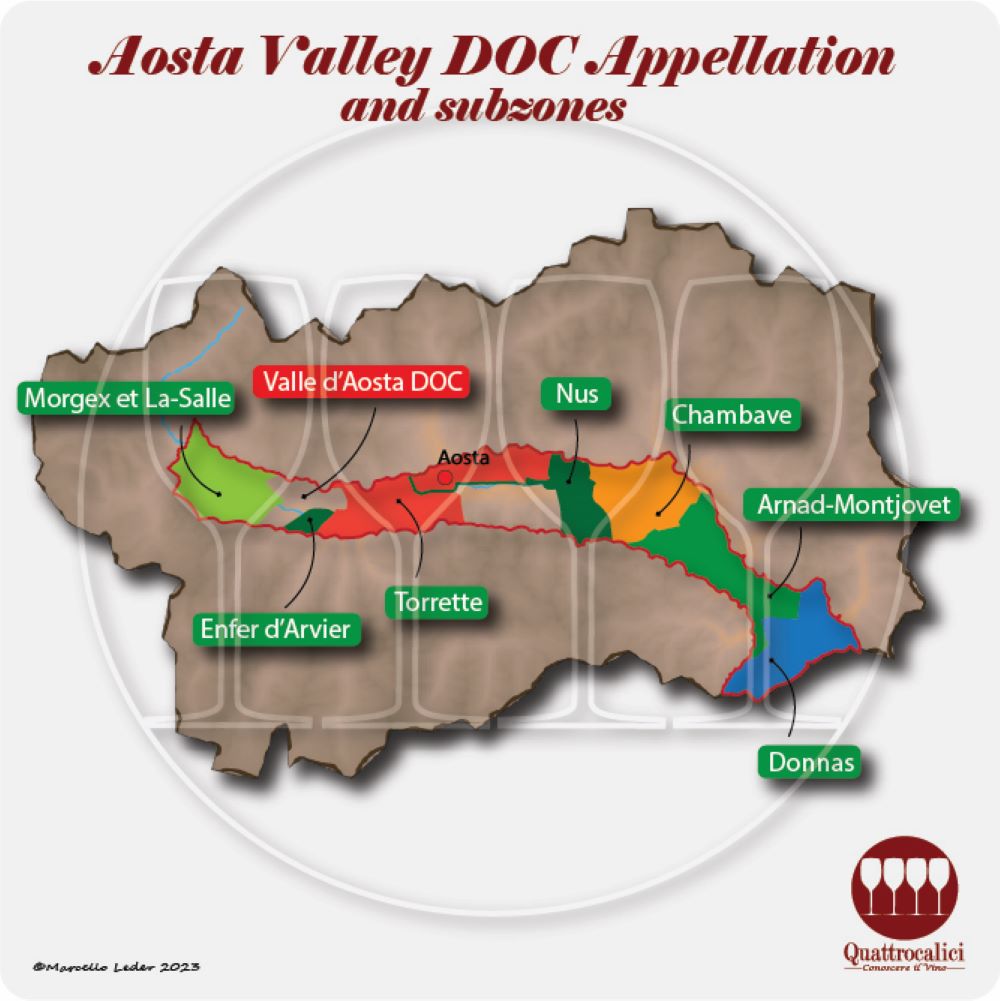


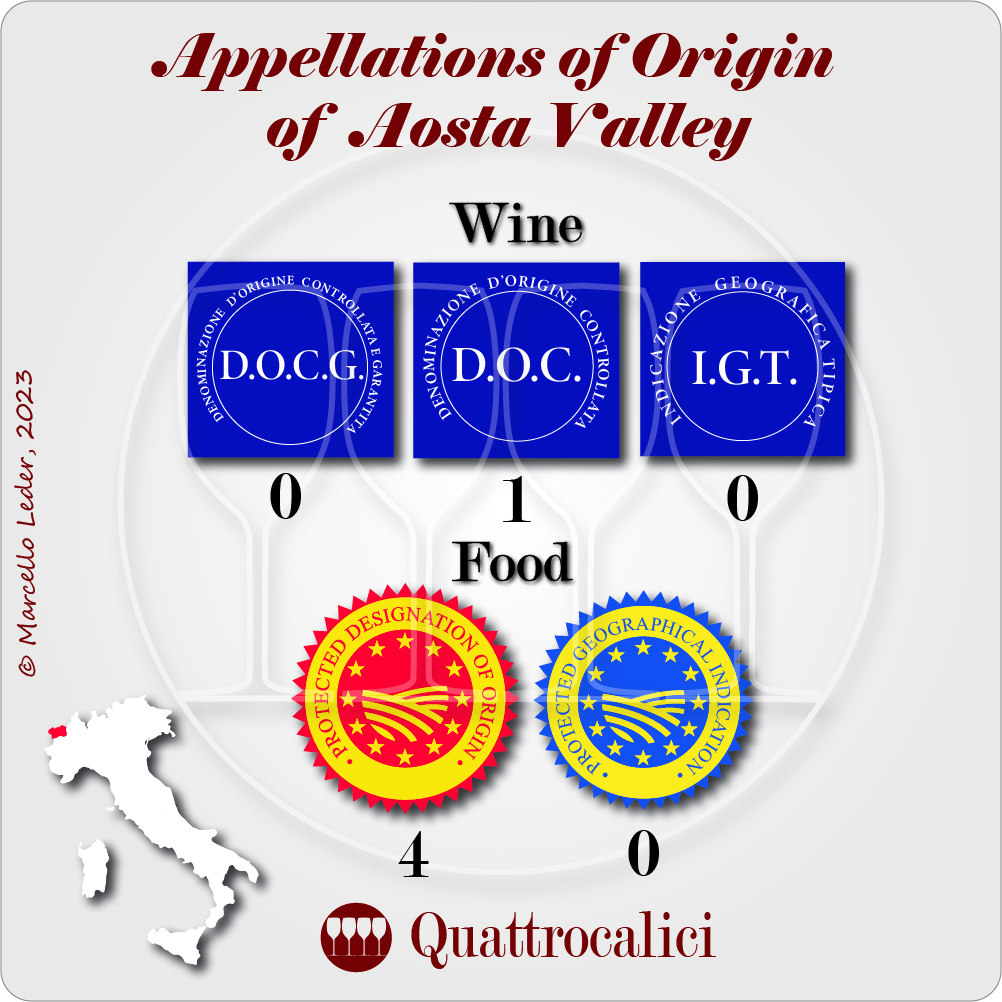
The DOC wines in Valle d’Aosta are consolidated into a single designation, known as Valle d’Aosta DOC or Vallée d’Aoste DOC. The absence of Denominazione di Origine Controllata e Garantita (DOCG) appellations in the region does not imply that the wines of Valle d’Aosta are less noteworthy compared to those from larger regional wine-producing areas. In fact, Valdostan wine production exhibits remarkable variety and complexity, as evidenced by the seven subzones within the DOC designation. These subzones follow the backbone of the region, the valley created by the Dora Baltea river, which flows southeast from the heights of Mont Blanc to the border with Piedmont. The area of the valley involved in viticulture extends from Morgex et La Salle, home to some of the highest vineyards in Europe, to Donnas, covering a distance of about 70 kilometers.
The subzones of the Valle d’Aosta or Vallée d’Aoste DOC are: Arnad-Montjovet, Blanc de Morgex et de La Salle, Chambave, Donnas, Enfer d’Avrier, Nus, and Torrette. Each of these subzones is distinctly characterized by its soil and climatic conditions, and they differ in both the grape varieties cultivated and the wines produced. This diversity reflects the unique terroir of each area, contributing to the rich tapestry of Valle d’Aosta’s winemaking tradition. Each subzone’s wines offer a glimpse into the distinct environmental influences and viticultural practices of the region, making Valle d’Aosta’s wines deserving of attention and appreciation for their unique qualities and expressions.