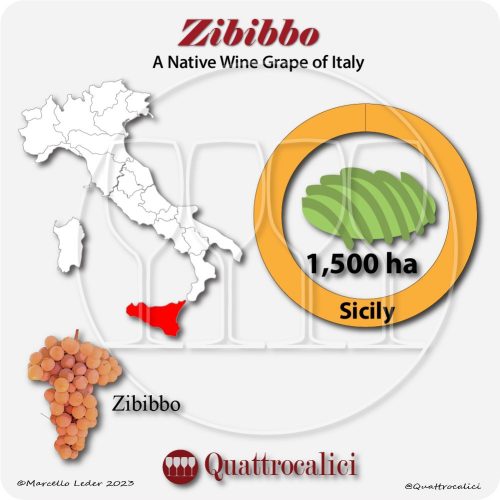


The Zibibbo grape is an aromatic variety belonging to the Muscat family, also known as Moscato d’Alessandria. It originates from Egypt and was first spread throughout the Mediterranean basin by the Romans. Its cultivation saw wider dissemination during the Arab rule in southern Europe. The name Zibibbo comes from the Arabic word zibibb, meaning raisin or dried grape, reflecting the Arabs’ extensive use of dried fruits. Internationally, Zibibbo is known as Muscat d’Alexandrie or Muscat romain in France, and it has also gained prominence in Australia, Chile, and Peru, where it is used in the production of the distilled spirit Pisco. In Italy, Zibibbo is predominantly cultivated in Sicily, particularly on the island of Pantelleria, where it is traditionally used as a table grape, raisins, or to produce celebrated wines like Passito di Pantelleria.
Ampelographic Characteristics
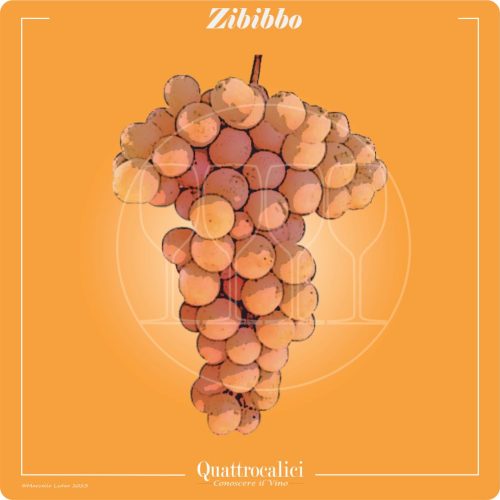
- Cluster: Large, pyramidal, sometimes winged, compact or loose.
- Berries: Large, round, with thick golden-green skins covered in abundant pruina.
- Pulp: Fragrant, sweet, and highly aromatic.
- Vine: Medium and consistent yields, vigorous, with a medium ripening period. Prefers short-pruned, minimally expansive training systems.
Agricultural Traits
Zibibbo is:
- Sensitive to sirocco winds, powdery mildew (oidium), and downy mildew (peronospora).
- Resistant to rot and drought. This resilience makes it one of the best grapes for appassimento (drying).
Cultivation and Use
Zibibbo thrives in Sicily, particularly on Pantelleria, where it is historically significant. In the early 20th century, its cultivation area even exceeded that of Catarratto. Today, Zibibbo is employed to produce:
- Dry wines: Delicate and aromatic, with hints of white fruit and flowers.
- Sparkling wines: Refreshing and fruit-forward.
- Sweet wines: Most notably the Passito di Pantelleria, renowned for its golden hue, rich apricot, acacia flower, and honey aromas, balanced by acidity, salinity, and a long, persistent finish.
Denominations
Zibibbo is included in the regulations of five Italian denominations, reflecting its versatility and cultural importance in both dry and sweet wine production. The variety continues to hold a special place in the Sicilian wine tradition, embodying both the aromatic richness and resilience of the Mediterranean terroir.