


The Torbato grape variety is cultivated exclusively in Sardinia, specifically in the Alghero area. Its origin is undoubtedly Spanish, having been introduced during the Catalan domination. It is also known as Vitis iberica and by local names such as Uva Catalana or Turbat. Clones of Torbato are also grown in certain areas of Portugal and in the Côtes du Roussillon region of France, at the foothills of the Pyrenees, where it is called Malvoise de Roussillon and used in the production of Vins Doux Naturels. In the Alghero region, it now occupies just over 90 hectares. While it was traditionally trained using the alberello system, more expansive forms, including tendone, are now more common. The calcareous-clay soils of the Alghero plain and the warm, dry climate are perfectly suited to this grape variety.
Although its origins are not Italian, it is in Sardinia that Torbato has been able to fully express its potential. The Alghero area benefits from a warm, dry climate and soils rich in calcium carbonate, clay, sand, and iron, which impart strength and minerality to the wines.
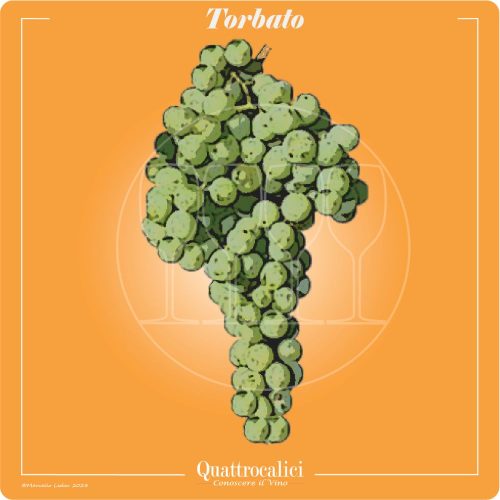
From an ampelographic perspective, Torbato has medium-sized, orbicular leaves with three to five lobes. The clusters are medium-sized, semi-compact, cylindrical, or cylindrical-conical, with medium-small, spherical berries that have a thick golden-yellow skin. Torbato is typically vinified in purity and as a base for brut sparkling wines, both included in the Alghero DOC designation.
Torbato wine is elegant, with a pale straw-yellow color, and lightly aromatic, featuring fresh fruity notes of apple, pear, and white plum. On the palate, it is dry, fresh, and velvety, with persistent flavors and a pleasant bitter finish.
