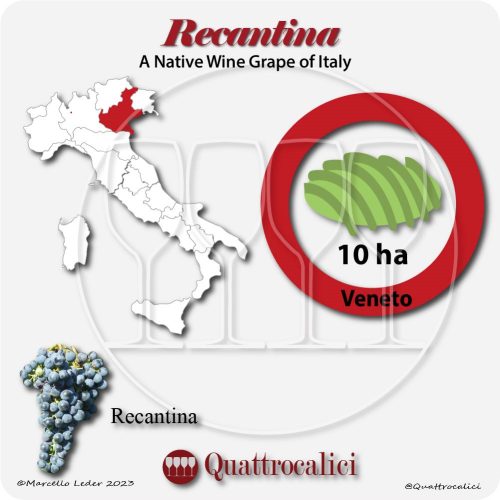


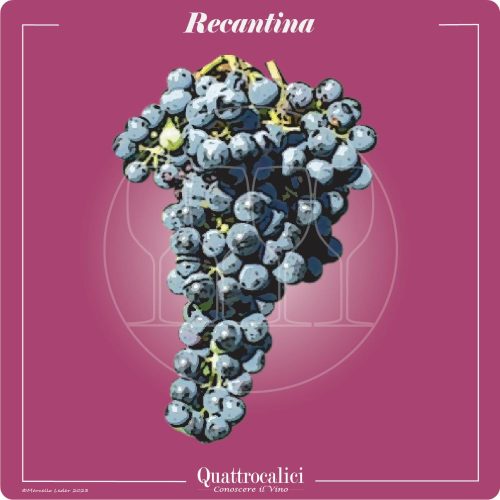
Recantina is an indigenous black-skinned grape variety that has been cultivated in Treviso province since ancient times. This grape faced a serious risk of extinction with the arrival of phylloxera at the beginning of the 20th century and has been revived today thanks to extensive research efforts. Recantina was mentioned multiple times as early as the late 1600s among the best varieties in Treviso, and in a survey published in 1874, it ranked among the most cultivated red grapes in three municipalities of Treviso, two of Asolo, and two of Castelfranco, producing a total of 28,815 hectoliters of wine. From 1900 onward, however, no ampelographer or viticultural study referenced Recantina as though it had mysteriously disappeared. However, Recantina survived in the memories of local vinegrowers and in some old rows and vineyards in the Colli Asolani area, especially around Montello, where it is sometimes confused with Raboso.
There are, as far as known, at least two varieties of this grape: Recantina a pecolo scuro (dark-stemmed) and Recantina a pecolo rosso (red-stemmed). The wine made from Recantina grapes has an intense, deep ruby red color. On the nose, it presents notes of red fruits and forest berries in particular, such as blueberry, currant, and blackberry, with a subtle hint of hazelnut, vanilla, and an important spicy component. On the palate, it is dry, smooth, warm, with good acidity. In the long finish, notes of red fruits return, along with blueberry jam and dried fruit. It is an excellent wine to pair with grilled meats, well-seasoned red meat, or game.