

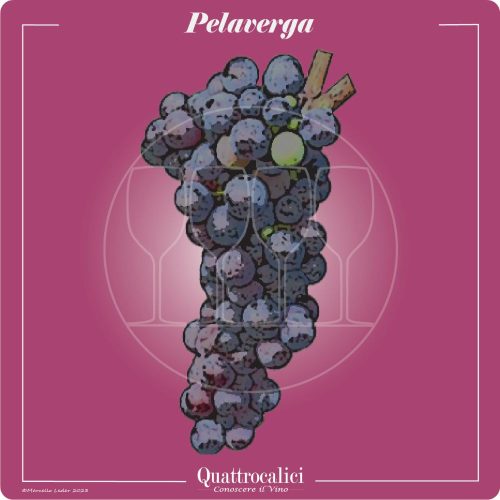
The Pelaverga grape is undoubtedly an indigenous variety from the Saluzzo area. In the Torino region, it is also known by the synonym Cari. The Pelaverga was introduced to the town of Verduno in the 17th century by Blessed Sebastiano Valfrè, who brought vines from the Saluzzo area, in the province of Cuneo. The curious name “Pelaverga” is believed to derive from the Latin “pellis virga,” referring to a technique where the bark of the vine’s branches was partially peeled to encourage maturation. The synonym Cari originates from the grape’s first mention as Cario by a 16th-century court oenologist. After the devastation caused by phylloxera and the depopulation of rural areas, this grape went into decline during the 19th century before being rediscovered towards the end of the same century.
The Pelaverga or Cari produces medium-to-large clusters, with winged pyramidal shapes and medium-small, spherical, and pruined berries. It has high productivity, but this can be relatively inconsistent. Pelaverga wines are light in color, with aromas of rose, raspberry, and subtle notes of geranium. The alcohol content is moderate (some Pelaverga wines can reach as low as 10% ABV), with mild tannins and moderate acidity, making it suitable for early consumption, even served chilled in the summer. It pairs well with Piedmontese cuisine, particularly with pasta, white meats, or appetizers like vitello tonnato, where its delicate tannins balance the creamy sensations of the sauce.
