


Nasco is a native white grape variety from Sardinia with ancient origins. It was almost forgotten until a few decades ago, when local producers decided to revive it, leading to the recognition of the Nasco di Cagliari DOC designation. Nasco was mentioned by Acerbi under the name nuscu, and historically, it has been known by other synonyms such as vitis amabilis, nascu, resu, or ogu de arrana. The name Nasco likely derives from the Latin word muscus, describing the characteristic mossy aroma of the aged wine. This suggests that the variety was known to the Romans, though it remains unclear whether they inherited it from the Phoenicians or introduced it from other regions, starting from the port area of Karalis (modern-day Cagliari).
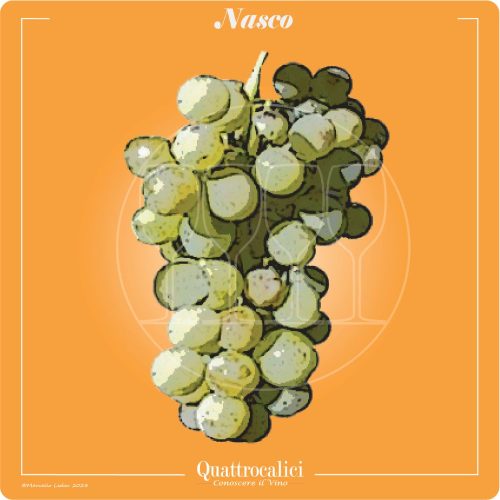
Today, although it is authorized for cultivation in the provinces of Cagliari and Oristano, Nasco is primarily grown on the warm, limestone soils of the Campidano di Cagliari. The Nasco grape is highly valued for its aromatic qualities, which contributed to its resurgence, even though its reputation remains mostly local. From an ampelographic perspective, Nasco features medium-sized clusters with a cylindrical shape and medium-sized, spherical berries. The berries have a very thin skin with low pruina (wax bloom) and beautiful golden hues. Classified among aromatic grape varieties, Nasco is cultivated using short training systems such as alberello and pruned with the Guyot system. It is a vigorous and moderately resistant vine with low but consistent yields.
