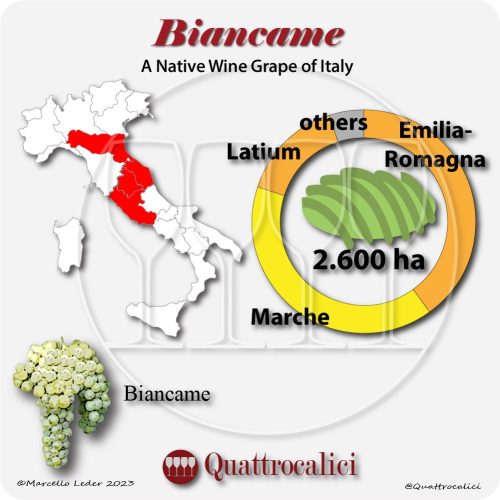


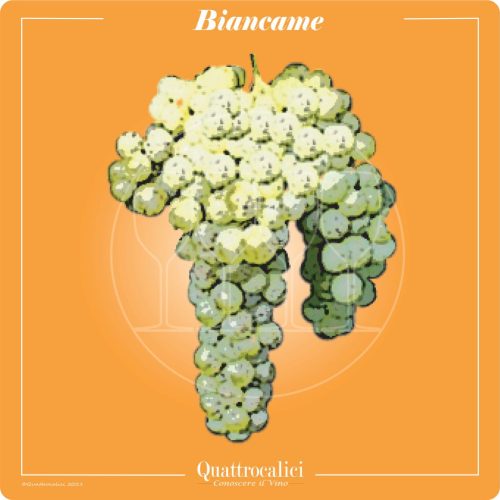
The Biancame grape is primarily found in the Marche region and is also known as Bianchello. The name Biancame comes from the rather pale color of its grapes. The origins of Biancame date back to several centuries before Christ, but the spread of the grape began around 500 BC. Tacitus even suggests that the wines made from Bianchello (Biancame) were the main cause of Hasdrubal’s defeat inflicted by the Romans in the famous Battle of the Metauro, with the Carthaginian warriors in a state of drunkenness. The start of the valorization of the Biancame grape dates back to 1969, when it gave rise to the Bianchello del Metauro DOC denomination. The grape is also present in the wines of the Colli di Rimini DOC denomination.
Today, most of the Biancame vineyards are located in the provinces of Ancona, Ascoli Piceno, and Pesaro-Urbino in the Marche region. In 2000, its spread in the territory amounted to 2,080 hectares. Biancame tends to produce delicate white wines with fruity flavors and floral aromas. In the Bianchello del Metauro DOC wine, produced in the province of Pesaro-Urbino, the Biancame content must be at least 95%, with up to 5% of Malvasia bianca lunga, known locally as Malvasia Toscana, allowed. Similarly, Biancame is present in the Colli di Rimini bianco DOC wine, produced in the province of Rimini in Emilia-Romagna